

A home’s time on the market is a clue, not a verdict. Ask when it was first listed, what comparable properties have sold for and whether anything has changed during the campaign. The answers can help you understand the asking price and prepare for a more informed conversation about your offer.
Buying a property involves more than finding a home you like. The right questions to ask a real estate agent when buying can reveal the seller’s plans, clarify the negotiation process and show what support to expect as you consider your next steps.
Use this guide to ask about comparable sales, the seller’s reasons for selling, negotiation and settlement, and the agent’s role throughout the purchase. These practical prompts can help you set expectations and assess the opportunity with greater confidence.
Key Takeaways
- Ask how long the property has been listed and what comparable local sales suggest about its asking price.
- Explore the seller’s plans and flexibility to understand where there may be room to negotiate.
- Clarify how the agent can support your offer, negotiations and settlement arrangements.
- Agree on how you’ll communicate and work together, while independently checking important property information.
1. Recent comparable property sales
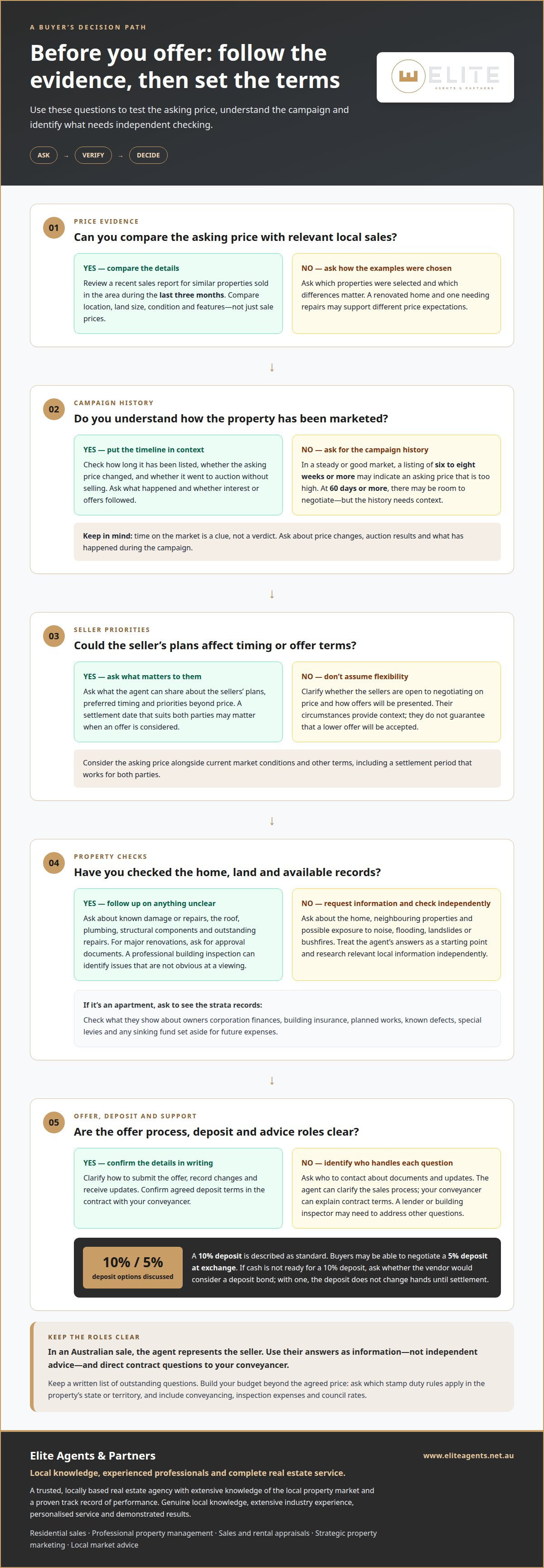
Ask for a recent sales report covering similar properties sold in the area during the last three months. Compare location, land size, condition and features, not just the final sale prices. A renovated home and one needing repairs may look alike online but support different price expectations. Ask how the examples were selected and which differences matter most. Reviewing recently sold properties can help frame that discussion around local results.
Check the property’s campaign history. Ask how long it’s been listed, whether the asking price has changed, and whether it was taken to auction without selling. If it passed in, ask what happened and whether any interest or offers followed. In a steady or good market, a listing of six to eight weeks or more may indicate an asking price that’s too high. A property on the market for 60 days or more may also present an opportunity to negotiate, though its history needs context.
Ask about known issues affecting the home, the land or neighbouring properties. Noise, nearby activity and exposure to flooding, landslides or bushfires may influence your decision, particularly if you’re considering an investment. Treat the agent’s answers as a starting point and research relevant local information independently. Ask whether the seller has disclosed past damage or repairs, and what records are available.
Be specific about the property’s condition. Ask what’s known about the roof, plumbing and structural components, and whether repairs are outstanding. If you return for another inspection, note your concerns and ask for clear information about them. A professional building inspection before finalising a purchase can identify issues that aren’t obvious during a viewing. For major renovations, ask to see approval documents. These questions help distinguish visible wear from issues that could affect safety, future repair needs or value.
2. Seller's reasons for selling and negotiating
Ask why the sellers are moving and whether their plans affect their preferred timing. A vendor who has already bought another property may be more flexible on terms. Someone moving interstate or overseas may value a settlement date that fits their plans. Ask what the agent can share about the sellers’ priorities and whether they’re open to negotiating on price. Their circumstances can provide useful context, but don’t assume they mean a lower offer will be accepted.
Ask about the property’s sale history, including any known fires or floods. This context may help you understand possible damage and identify what further information to seek before deciding. The sellers’ reason for moving, the home’s history and the surrounding neighbourhood can all inform your assessment. Focus on facts that could affect your offer rather than inferring motivation from the property’s presentation.
Before negotiating, clarify how the asking price relates to the property and current market conditions. Then consider which terms matter alongside price, such as a settlement period that suits both parties. An offer with timing that works for the sellers may appeal even if it isn’t the highest. Ask how offers will be presented and whether the sellers have priorities beyond price. This can help you make a considered proposal rather than simply increasing your offer.
Discuss the deposit before committing to an offer. A 10% deposit is described as standard, but buyers may be able to negotiate a 5% deposit at exchange instead. If you don’t have cash ready for a 10% deposit, ask whether the vendor would consider a deposit bond. With a deposit bond, the deposit doesn’t change hands until settlement. Confirm any agreed deposit terms in the contract with your conveyancer.
To weigh seller motivation against local conditions, discuss your buying plans with a local property professional.
3. How Can a Real Estate Agent Help Me in Buying a Home?
Ask what information and sale documents are available for the property. A useful question to ask a real estate agent when buying is who can explain each part of the transaction and where relevant records come from. The agent can clarify the sales process, while your conveyancer can explain contract terms. Keeping these roles clear helps you direct questions to the right person.
For an apartment, request the strata records and ask what they show about the owners corporation’s finances, building insurance, planned works and known defects. Ask whether special levies have been raised and whether a sinking fund is set aside for future expenses. These details can help you understand potential costs and building decisions before deciding whether the apartment suits your plans.
Build a purchase budget that accounts for more than the agreed price. Ask which stamp duty rules apply in the property’s state or territory, as the amount depends on its value and location. Include conveyancing, inspection expenses and council rates in your planning. Ask the agent which property documents are available, then discuss legal costs and contract questions with your conveyancer.
Before making an offer, clarify how to submit it and receive updates. Ask how the agent will communicate requested changes, where written terms will be recorded and whom to contact about documents. If you’re buying with someone else, agree who will receive correspondence and coordinate decisions. A clear process helps you track information without confusing sales communication with independent advice.
Use the agent’s responses to identify what needs further attention, not as a substitute for specialist review. For example, planned works noted in strata records may prompt questions for your conveyancer about the relevant documents. Keeping a written list of outstanding queries can help you address them in order before proceeding.
4. Choosing and working with a real estate agent
Start by clarifying the agent’s role. In an Australian sale, the real estate agent represents the seller, so treat their answers as useful information, not independent advice. Ask who will handle your enquiries, how offers are passed to the seller and how you’ll receive updates. A buyer should also know which questions need input from a conveyancer, lender or building inspector.
Test the agent’s local knowledge with practical questions about the suburb. Ask which nearby developments are planned and how new infrastructure could affect the property’s appeal or value. Ask about local buyer demand, which types of homes are attracting interest and whether recent sales reflect the same part of the suburb. A useful explanation connects local evidence to the home rather than relying on broad market claims, a quality seen in specialised boutique agencies such as Galloway Realty that combine regional property insight with hands-on guidance.
Agree on a communication approach before making an offer. Decide how you’ll keep in touch, who your main contact is and what updates you need during negotiations. Ask the agent to explain each offer’s terms, the seller’s response and the next step. If you’re buying with someone else, clarify how both buyers will receive information and make decisions.
Ask direct questions about issues that may affect ownership. Find out whether the property has known disputes or encumbrances, and whether planned local works could change access or amenity. Ask what information supports the agent’s response, then research the property and neighbourhood independently. If you’re buying as an investment, compare any rental estimate with your own research into rents for similar nearby homes.
Finally, ask how the agent will manage communication if an offer needs a quick response. Discuss your preferred contact method, availability and decision-making process before negotiations become time-sensitive. Keep written records of important terms, including any approval or condition attached to your offer. A professional working relationship should clarify roles, evidence and next steps, while leaving independent checks and contract advice to the appropriate specialists. For buyers who are also exploring residential property overseas, agencies such as AW Homes of Bellabay Realty demonstrate how clear communication and dedicated guidance support clients throughout the purchasing process.
Elite Agents & Partners
Elite Agents & Partners can help you put local property information into context as you assess a home and prepare your next steps. Based in Berwick, the agency combines local market knowledge with industry experience, personalised service and a proven track record of performance. Its team understands local property values, buyer demand and neighbourhood conditions.
Turn to the team when you want practical local property advice or a clearer view of comparable sales and market conditions. Whether you’re weighing an asking price or considering a property purchase, informed guidance can help you frame your questions and understand the sales evidence. For advice specific to your plans, contact Elite Agents & Partners.
Make your next move with clarity
Let your next step reflect the kind of property you’re seeking and how you plan to use it. For an established home, focus on how it fits your priorities. If you’re considering an investment, think about ongoing management as well as the purchase. The questions to ask a real estate agent when buying should help you reach a decision that suits your plans, rather than simply move quickly towards an offer.
Elite Agents & Partners supports buyers through residential property sales and project marketing, and offers property management for owners considering an investment. This perspective can be useful whether you’re weighing an established home, exploring a project or planning for ongoing management. Contact the team to discuss your plans and the local market.
Move forward at your pace, with clear priorities and informed support.
Frequently Asked Questions
How long has the property been on the market?
Ask for the original listing date and whether the property was withdrawn and relisted, as a new campaign can obscure its full marketing history. Australian homes average around a month on the market, so compare this listing’s time with local conditions rather than treating duration alone as evidence. Also ask what changed in the campaign, such as the asking price or presentation.
What is the history of the property’s ownership?
Ask how long the sellers have owned the property and whether earlier ownership details are available. Review relevant public records with your conveyancer to clarify names, dates and any matters that need explanation. Ownership history can add context to a home’s sale history, but it doesn’t establish its physical condition. Keep contract review separate from the agent’s sales information.
Are there property zoning restrictions?
Ask whether the property’s zoning limits its current use or could affect changes you’re considering. Zoning rules and planning controls are local, so request relevant details and check them with the local council. If you’re considering an extension or a different use, ask council whether planning approval may be required before treating that change as part of the property’s potential.
Are there any development plans for the area?
Ask whether local plans include new infrastructure or other developments near the property. A planned transport link, road project or nearby development may influence the suburb’s appeal and your view of future amenity, but plans can change. Ask what stage a proposal has reached, then consult council planning information for current details. Consider how construction, access and nearby services could affect how you use the property.
Have any renovations been done on the property?
Ask what work was completed and whether council approval documents are available, especially for major alterations. Request records that describe the scope of the work, not just receipts or photographs. A renovated kitchen may look polished while leaving questions about less visible additions. Compare the documents with the changes you can see, and clarify any discrepancy before deciding whether the renovation suits your plans.
How can a real estate agent help me in buying a home?
An agent can explain campaign details, provide information about comparable sales, relay your offer and communicate the seller’s response. Remember, the selling agent represents the seller, so assess property and neighbourhood information independently. Local knowledge can help put a home in context across Berwick, Narre Warren, Narre Warren South, Narre Warren North, Hallam, Hampton Park, Dandenong, Doveton, Cranbourne, Cranbourne East, Clyde, Clyde North, Officer, Pakenham, Beaconsfield and Drouin.
Disclaimer
Disclaimer: This article was prepared with the assistance of artificial intelligence and reviewed for general informational purposes. While reasonable care has been taken to ensure accuracy, property-market conditions, prices, legislation and other information may change. The content does not constitute legal, financial, taxation, valuation or other professional advice. Readers should verify information and obtain advice appropriate to their circumstances before making property decisions. Elite Agents & Partners does not guarantee any specific sale price, rental return or outcome.


