

The highest offer isn’t always the strongest one. When negotiating offers when selling a house, the headline price matters, but conditions, proposed timing and the buyer’s readiness to proceed can also affect how well an offer suits you.
It can be difficult to weigh offers with different terms, especially when you’re concerned that a counteroffer might affect a buyer’s interest. Comparing each proposal against the same criteria can help you make a considered decision rather than focusing on price alone.
This guide explains how to assess offers, clarify conditions and consider settlement timing. It also covers when to seek input from your sales agent and when contract questions should go to a qualified legal professional. Elite Agents & Partners is based in Berwick and supports vendors with residential property sales, sales appraisals and buyer engagement and negotiations.
Key Takeaways
- When negotiating offers when selling a house, weigh the terms and buyer readiness alongside the headline price.
- Compare offers against your priorities, including conditions and proposed timing, before deciding which best fits your circumstances.
- Review each offer, clarify anything uncertain, then decide whether to accept, decline or make a counteroffer.
- A local sales agent can help you understand buyer feedback and discuss your options. Refer contract questions to a qualified legal professional.
Negotiating offers when selling a house: what vendors need to assess
Receiving an offer can be exciting, but deciding how to respond may take careful thought. Negotiating offers when selling a house means considering the price, conditions and proposed contract arrangements together. An offer isn’t automatically the best fit simply because it has the highest figure.
A strong offer is one that fits your priorities, circumstances and appetite for uncertainty. The idea of weighing your alternatives is central to negotiation principles. Think about what matters most to you before deciding which terms you may be willing to discuss.
What makes an offer more than its price?
Look closely at the proposed conditions, deposit arrangements and settlement timing. Consider how each term fits your plans. For example, a proposed settlement date may suit your next move, or it may create pressure if you need more flexibility. The same terms won’t suit every vendor, and their suitability depends on your circumstances and the contract. Ask your sales agent to clarify what the buyer has proposed, and refer questions about contract wording or legal effect to a qualified legal professional.
Why local context matters in Berwick and nearby suburbs
Comparable local sales can help you put an offer in context, while buyer interest during your campaign may add useful perspective. Neither determines what your property should sell for. A sales appraisal can help you discuss relevant comparable sales and local conditions before weighing an offer.
Elite Agents & Partners is based in Berwick and provides residential property sales and local property advice. Its local focus includes Berwick, Narre Warren, Narre Warren South, Narre Warren North, Hallam, Hampton Park, Dandenong, Doveton, Cranbourne, Cranbourne East, Clyde, Clyde North, Officer, Pakenham, Beaconsfield and Drouin. Explore its property appraisal information, or read the Berwick house valuation guide for more context.
How to compare competing house offers beyond the headline figure
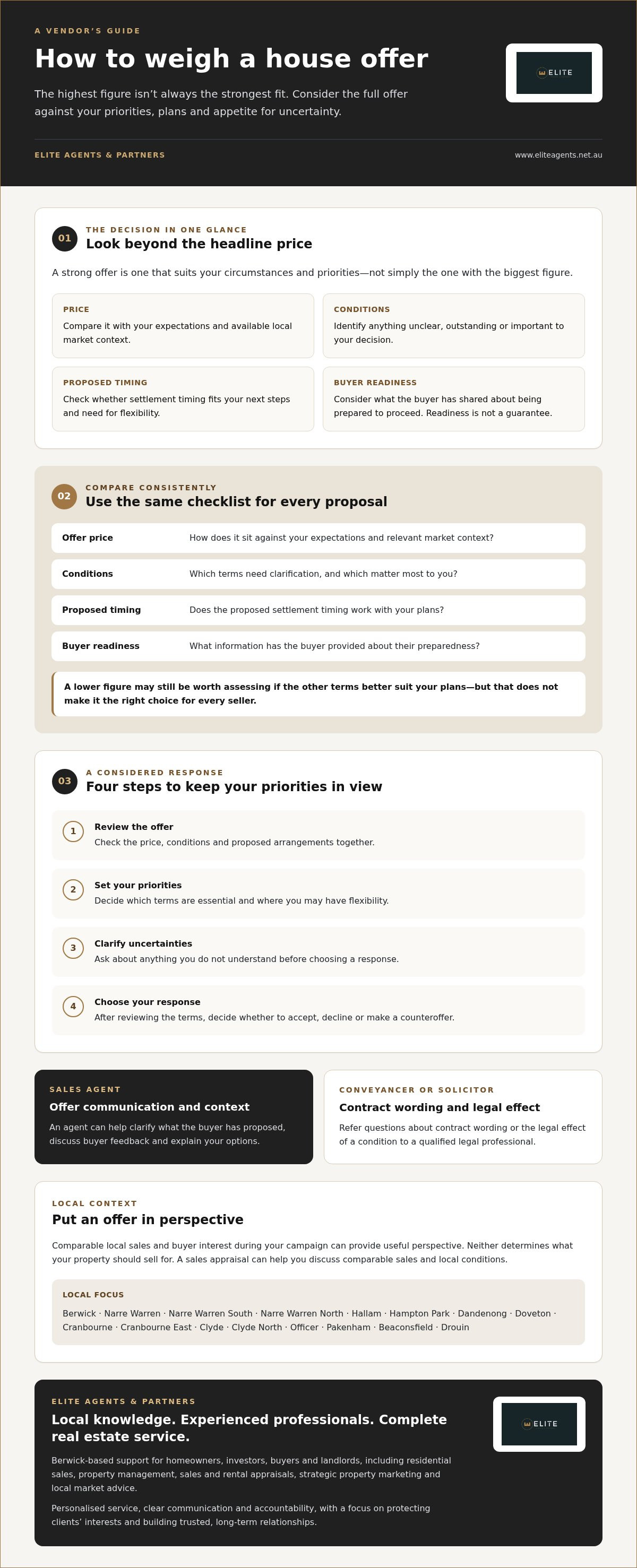
When negotiating offers when selling a house, set out each proposal side by side before deciding how to respond. Compare the details that could affect your plans, not just the amount offered.
Compare offers by price, terms and practical fit. This simple table can help make the differences easier to see:
| What to compare | Questions to consider |
|---|---|
| Offer price | How does it compare with your expectations and the available market context? |
| Conditions | Are any conditions unclear, outstanding or important to your decision? |
| Proposed timing | Does the proposed settlement timing fit your next steps? |
| Buyer readiness | What information has the buyer provided about their preparedness to proceed? |
Buyer readiness can help you understand an offer, but it doesn’t guarantee that the transaction will proceed. Assess every proposal against your own circumstances and priorities. A sales agent can help clarify what the buyer has communicated, while a sales appraisal can provide context from comparable sales and local conditions. Elite Agents & Partners provides sales appraisals for vendors considering their options.
Which offer conditions should a vendor clarify?
Before responding, identify any conditions that are unclear, outstanding or significant to your decision. Ask your sales agent to seek clarification from the buyer where appropriate. For questions about contract wording or the legal effect of a condition, speak with a conveyancer or solicitor. An agent can help communicate the offer, but shouldn’t interpret legal documents or provide legal advice. Similar principles of clarifying title details and documentation apply across real estate markets globally; for instance, European property firms such as Heinrichs Immobilien frequently provide guidance on how official land registries and property records impact transactions.
When might a lower offer suit your circumstances?
Hypothetical example: One vendor may prioritise a particular settlement timeframe, while another may value flexibility. If competing offers differ in their proposed timing or conditions, a vendor might assess the lower figure differently in light of their own plans. That doesn’t make the lower offer the right choice for every seller. Compare the full terms and seek clarification before deciding.
How to negotiate a house offer without losing sight of your priorities
Stay focused on what matters to you rather than reacting under pressure. Use this practical sequence when negotiating offers when selling a house:
- Review the offer: Check the price, conditions and proposed arrangements.
- Set your priorities: Decide which terms are essential and where you may have flexibility.
- Clarify uncertainties: Ask questions about anything you don’t understand before choosing a response.
- Choose your response: You can accept, decline or make a counteroffer.
Negotiating doesn’t automatically mean a buyer will withdraw. A clear, considered response can keep a discussion moving, but no approach can guarantee the buyer’s next decision or a sale outcome. Your sales agent can help communicate your position and relay the buyer’s response without assuming how they’ll react. Effective negotiation and clear communication remain essential across property markets; to see how licensed specialists guide clients through real estate sales and negotiations in Florida, check out Krissy in the Keys (Krissy Carnahan, Realtor).
Preparing a clear counteroffer
Before making a counteroffer, separate your non-negotiable priorities from the terms you could discuss. Be precise about the changes you’re proposing to reduce the chance of misunderstanding. Your sales representative can convey your position and manage buyer engagement. For changes to contract terms or questions about their legal implications, consult a qualified conveyancer or solicitor.
When to pause and ask for professional guidance
If a condition or contract detail is unfamiliar, clarify it before accepting or countering. Your sales agent can explain what the buyer has communicated, seek further information and support negotiations. That role is separate from independent legal advice. A conveyancer or solicitor can advise you on contract wording and implications so you can make a considered decision.
Elite Agents & Partners supports vendors with residential property sales, buyer engagement and negotiations. If you’d like to discuss how an offer fits your priorities, a local agent can help you consider the buyer’s response alongside your circumstances. You can find contact details on the agency contact page.
Choosing your next step with a local Berwick sales agent
Before responding to an offer, keep your decision anchored to what matters to you. Use this checklist:
- Clarify your priorities: Identify the terms and timing that suit your plans.
- Review each offer: Check the price, conditions and proposed arrangements.
- Ask questions: Clarify buyer feedback or any terms you don’t understand.
- Seek appropriate advice: Refer contract wording and legal questions to a conveyancer or solicitor.
A local sales agent can help put buyer feedback and comparable sales into context, then communicate your priorities during negotiations. Elite Agents & Partners is based in Berwick and provides local property advice, sales appraisals and buyer engagement. Discussions can draw on recent comparable sales and local market conditions relevant to your property, without implying a guaranteed price or outcome.
What to discuss with a sales agent
Ask how buyer feedback and comparable local sales inform the offer discussion. Explain your priorities and how you’d like to receive updates. If you’re an investor weighing a sale against continuing to rent out a property, the agency also offers property management and rental appraisals. For broader selling context, read the Berwick real estate selling guide.
Get advice tailored to your property sale
A sales appraisal and local property advice can help you explore the market context for your property and prepare questions about an offer. Elite Agents & Partners also provides residential property sales and tailored property marketing campaigns that you can discuss in relation to your selling plans. For information about appraisals, visit the sales appraisal page.
Make your next offer decision with clarity
Confident negotiating offers when selling a house starts with looking beyond the headline figure. Compare price, conditions and timing against your priorities, and ask for clarification before deciding whether to accept, decline or counter. If contract wording or legal implications are unclear, seek advice from a qualified conveyancer or solicitor.
Local context can help you consider buyer interest and how an offer fits your sale. Elite Agents & Partners supports local property owners with residential property sales, sales appraisals, buyer engagement and negotiations, and tailored property marketing campaigns. Discussing your circumstances with a local agent can help you understand your options without assuming any particular price or outcome.
Take time to understand each offer and choose a response that reflects what matters to you. Contact Elite Agents & Partners to discuss your property sale.
Frequently Asked Questions
Is the highest offer always the best offer?
No. The highest offer isn’t automatically the best fit for your circumstances. Price matters, but conditions, proposed timing and the overall terms can also influence your decision. Compare each offer using the same criteria, then ask questions about anything unclear. If you need help understanding contract wording or legal implications, consult a qualified conveyancer or solicitor before deciding how to proceed.
Can I negotiate after receiving an offer on my house?
Yes, you can consider accepting, declining or making a counteroffer. When negotiating offers when selling a house, weigh any requested change against your priorities and the terms already proposed. A buyer may respond in different ways, so no response can guarantee their next decision. Your sales agent can help communicate with the buyer, while a conveyancer or solicitor can advise on contract wording and legal implications.
How do I compare multiple offers on my house?
Set out each offer’s price, conditions and proposed timing side by side, then assess the differences against your circumstances. Note whether a condition is still outstanding or whether the proposed timing suits your plans. Ask for clarification if information is missing. A buyer’s stated readiness may inform your assessment, but it doesn’t guarantee the transaction will proceed. Seek legal advice on contract interpretation.
What happens if a buyer changes their offer after negotiations?
The appropriate next step depends on what has been discussed and whether documents have been exchanged or signed. Keep a record of the revised terms and avoid assuming what they mean for your contractual position. Ask a qualified conveyancer or solicitor to review relevant documents. Your sales agent can help communicate with the buyer and discuss the revised offer, but can’t replace independent legal advice.
Should I accept an offer before speaking with a conveyancer?
If you’re unsure about a condition, contract term or the effect of accepting, seek advice from a qualified conveyancer or solicitor before deciding. A sales agent can explain the negotiation process and communicate with the buyer, but doesn’t provide legal advice. Elite Agents & Partners is based in Berwick and serves property owners across nearby areas including Narre Warren, Hallam, Dandenong, Cranbourne, Clyde, Officer and Pakenham. Make sure you understand the proposed terms.
Disclaimer
Disclaimer: This article was prepared with the assistance of artificial intelligence and reviewed for general informational purposes. While reasonable care has been taken to ensure accuracy, property-market conditions, prices, legislation and other information may change. The content does not constitute legal, financial, taxation, valuation or other professional advice. Readers should verify information and obtain advice appropriate to their circumstances before making property decisions. Elite Agents & Partners does not guarantee any specific sale price, rental return or outcome.


