

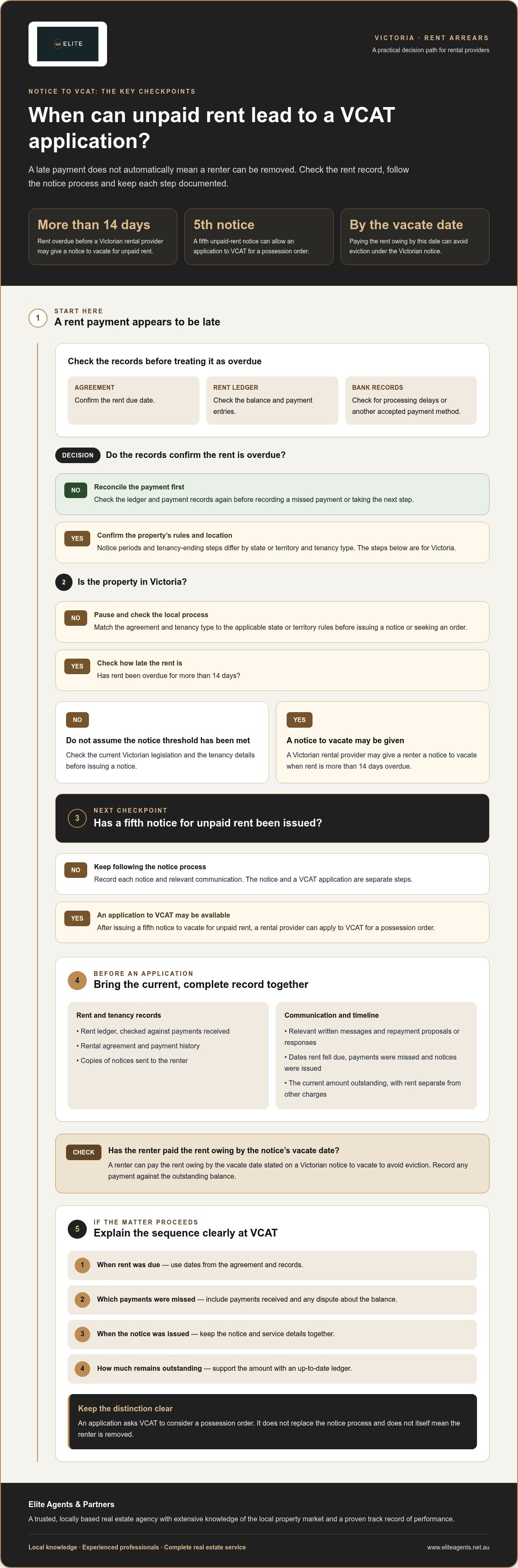
A late rent payment doesn’t automatically mean a tenant can be removed. In Victoria, a rental provider may give a renter a notice to vacate when rent is more than 14 days overdue, and a fifth notice for unpaid rent can allow an application to VCAT for a possession order. Knowing how to handle late rent payments starts with checking the rent record and following the correct process.
It’s understandable to want a clear response when rent hasn’t arrived. Act promptly, but keep communication open and follow the rules that apply to the tenancy and its location.
This guide explains how to confirm that rent is overdue, contact the renter constructively and identify the relevant state or territory rules. It also outlines when a Victorian rental provider may apply to VCAT for a possession order, so you can understand the process before deciding what to do next.
Key Takeaways
- Compare the rent ledger with the agreement’s due date and payment records before treating a payment as overdue.
- Under Victoria’s Residential Tenancies Act, a residential rental provider or property manager can issue a Notice to Vacate for unpaid rent when it is specified days overdue, depending on current state legislation.
- Always check Victoria's specific rental laws and Residential Tenancies Regulations before issuing a notice or taking steps towards ending a tenancy.
- Contact the tenant promptly and keep communication clear, so you can understand the situation and discuss a practical way forward with Elite Agents & Partners.
Is the rent actually overdue?
Start with the due date in the rental agreement, then compare it with the rent ledger and bank records. In Queensland, if rent isn’t paid by its due date, the tenant is one day in arrears the following day. Before recording a missed payment, check for processing delays or a payment made through another accepted method.
Notice periods vary by tenancy type and state. In Queensland general tenancies and long-term moveable dwellings, a property manager or owner can issue a Form 11 when rent is more than 7 days behind, according to the Residential Tenancies Authority Queensland. Rooming accommodation has separate thresholds: a renter who has lived there for less than 28 days may receive a Form R11 as soon as they’re in arrears, with at least 2 days to pay. After more than 28 days, a breach notice may be given at 2 days in arrears, with at least 4 days to pay.
Frequent arrears can be relevant at a NSW Tribunal hearing, even if the tenant has caught up. The Tribunal considers the length of the tenancy, how often rent fell behind and the amount owing. Keep rent records, reminder letters and details of earlier Tribunal applications. A tenant can explain how much extra they can afford to pay each week towards the arrears.
For a payment plan, put the arrears, instalment amounts and payment dates in writing. Record each payment against the balance and update the plan if more rent falls due. A clear schedule helps both parties track progress.
If a renter dies, check the ledger and agreement, then communicate sensitively with the renter’s representative or family. Keep rent and property records together while the tenancy’s status is clarified.
Tenants can seek free financial counselling from the National Debt Helpline on 1800 007 007. For free tenancy advice, contact a tenants’ advice service in their state or territory.
Applying to VCAT for a possession order
Landlords can address overdue rent through written communication, an agreed repayment plan and the formal process available in their state. In Victoria, a rental provider can apply to VCAT for a possession order after issuing a fifth notice to vacate for unpaid rent. The notice and application are separate steps, so keep records of each.
Before applying, organise the rent ledger, rental agreement, payment history and copies of notices sent to the renter. Include relevant written messages, such as any repayment proposal or response. A clear timeline helps show when rent fell due, what remains unpaid and how the matter progressed. Check that the balance includes payments received, rather than relying on an old ledger entry.
In the application, state the order sought and the facts supporting it. Use dates and amounts from your records, and separate overdue rent from any other charge. Keep communication factual and consistent with the notice. If the renter has paid or disputes the balance, record that too, so the documents reflect the current position.
A renter can pay the rent owing by the vacate date stated on a Victorian notice to vacate to avoid eviction. Keep the account up to date and record any payment against the outstanding balance. If the renter proposes instalments, put the schedule and payment dates in writing. This can support recovery while giving both parties a clear record of the arrangement.
At a VCAT hearing, explain the sequence clearly: when rent was due, which payments were missed, when the notice was issued and how much remains outstanding. Bring organised records to support each point. An application asks VCAT to consider a possession order; it does not replace the notice process. For landlords considering next steps, a documented payment discussion may help resolve the matter before it proceeds.
Checking state and territory landlord rules
First identify the property’s state or territory and tenancy type. Notice periods and the steps for ending a tenancy differ across Australia. Before issuing a notice, calculating a deadline or seeking an order, match the agreement to the applicable rules. Rooming accommodation and caravan park arrangements can follow different processes from residential tenancies.
In Victoria, more than four rent-related notices to vacate within a 12-month period count as four strikes. Those strikes are cleared after the 12-month period if no further notices are issued. A rental provider or agent also cannot charge an administration or late fee for processing rent payments, even when rent is late. Section 91ZM of the Residential Tenancies Act 1997 concerns non-payment under a residential rental agreement.
In New South Wales, rent must be at least 14 days overdue before a landlord or agent can issue a non-payment termination notice. The notice must be in writing, signed, and give the tenant at least 14 days to vacate. If posted, allow an extra 7 working days for delivery. A tenant who pays the amounts owing or fully follows an agreed repayment plan generally cannot have the tenancy terminated for those arrears.
Queensland and Western Australia have distinct notice processes. In Queensland, a general-tenancy Notice to Leave after an expired rent breach notice gives at least 7 days to move out. In Western Australia, a landlord may issue a Form 21 breach notice for missed or overdue rent, but cannot charge late fees or interest.
- Check whether the agreement is a general tenancy, rooming arrangement or site agreement.
- Use the correct notice for that state and tenancy type, then record its service date and deadline.
- Keep the rent ledger and copies of notices together, so the period and balance are clear.
For example, a landlord in NSW should not apply Victoria’s strike rules to a local tenancy. Match each decision to the property’s jurisdiction and agreement.
Telling the rental provider about late rent
Contact the landlord or property manager as soon as you know a payment will be late. Include the rent due date, how much you can pay now and when you expect to pay the balance. In Western Australia, a tenant having difficulty paying should notify the landlord promptly and arrange to make up the payment. Early, clear communication gives both parties a basis for discussing practical next steps.
Put your proposal in writing, even if you have already discussed it by phone. Refer to the rental agreement and state the proposed payment dates and amounts. If you can’t pay the full rent, offer a realistic instalment plan rather than a date you may miss. Ask for the agreed schedule to be recorded in writing, then keep receipts and messages together. This creates a useful record if the balance or timing is later disputed.
If you’re the rental provider, keep the conversation factual and respectful. Confirm the ledger balance, explain what remains outstanding and ask the renter to suggest a workable payment arrangement. A written reminder should state the amount owed and the relevant repayment date. A formal late-rent notice may be appropriate once rent is more than a few days late, but the correct notice and timing depend on the state or territory.
If an initial reminder hasn’t resolved the arrears, follow up after a week. After a week or two, explain the potential consequences of continued non-payment, including applicable late fees only where local rules and the agreement permit them. Don’t present eviction as an immediate outcome: follow the notice process required in the property’s jurisdiction. A maintenance request doesn’t remove the renter’s obligation to keep paying rent while living at the property.
Discuss rental property management
Elite Agents & Partners: Property Management
Elite Agents & Partners provides Property Management for landlords seeking professional oversight of a rental property. If late payments are becoming a recurring concern, a property manager can help organise rent administration and tenant communication while following relevant local procedures.
With genuine local knowledge and extensive industry experience, the team offers practical advice shaped by rental market conditions and the landlord’s circumstances. Its personalised approach and demonstrated results support clear communication and accountability throughout the property management relationship.
For landlords considering ongoing support, Property Management is the relevant next step. Contact Elite Agents & Partners to discuss your rental property.
Set a clear direction for your rental property
A rental relationship is easier to manage when expectations, records and communication are consistent. Make rent administration part of a wider plan for looking after the property and maintaining a constructive relationship with the renter. A measured response gives you a clearer basis for decisions as circumstances change, rather than relying on hurried reactions.
Elite Agents & Partners brings local market knowledge and industry experience to its Property Management service, with personalised communication and accountability. The team also provides Residential Property Sales and Project Marketing, supporting clients at different stages of property ownership. If you’re refining how to handle late rent payments, consider whether dedicated management support could help keep your rental arrangements organised.
Consider what you need from ongoing management: clear records, thoughtful communication with renters and decisions informed by local conditions. Choose a practical next step that supports your property and longer-term plans.
A considered approach can help you move forward with greater clarity and confidence.
Frequently Asked Questions
Can you evict a tenant who doesn't pay rent?
A rental provider may seek to end a tenancy, but the process depends on the state and tenancy type. In Queensland general tenancies, a tenant who pays within the Form 11 timeframe can continue the tenancy agreement. That is one possible outcome, not a rule for every state. Check the notice and applicable local process before taking further action.
Should I charge late rent fees?
Don’t automatically add a late fee to the rent balance. Before requesting an extra charge, check whether the relevant state or territory permits it and whether the agreement allows it. Keep rent owed separate from any other amount in your records, and show how you calculated each figure. A clear account can prevent confusion if the renter questions the total.
What are acceptable reasons for late rent payments?
An unexpected bill, interruption to income or family emergency may explain a delay, but the reason alone doesn’t settle the account. Ask what has changed, what payment is feasible and what might help prevent another missed instalment, such as aligning payment dates with an income cycle. For landlords deciding how to handle late rent payments, distinguish an explanation from an agreed repayment arrangement.
What if I get a non-payment termination notice?
Read the notice and check whether you dispute the amount, dates or steps taken. In Queensland rooming accommodation, a tenant who receives a Notice to leave may pay the rent and request in writing to stay. Whether they can remain is up to the property manager or owner. Keep a copy of the request and any response.
What if the Tribunal makes a termination order?
Read the order carefully and note what it requires, including any dates and directions. Keep it with your rental agreement and payment records. If you believe an important payment or detail hasn’t been considered, communicate that in writing. Don’t assume an informal discussion changes the order; get advice about the options available in your circumstances.
What if the landlord applies to the Tribunal?
Check the application for the hearing details and claims, then prepare a response to any points you dispute. In Queensland, a tenant disputing a Notice to leave may apply to the Residential Tenancies Authority for dispute resolution assistance. Keep copies of correspondence and relevant records together so you can refer to the facts clearly during the process.
Disclaimer
Disclaimer: This article was prepared with the assistance of artificial intelligence and reviewed for general informational purposes. While reasonable care has been taken to ensure accuracy, property-market conditions, prices, legislation and other information may change. The content does not constitute legal, financial, taxation, valuation or other professional advice. Readers should verify information and obtain advice appropriate to their circumstances before making property decisions. Elite Agents & Partners does not guarantee any specific sale price, rental return or outcome.


