

A capable local property manager does more than collect rent. Choosing Elite Agents & Partners to manage my rental property near me means finding support with tenant selection, rent collection, arrears, maintenance and rental-law compliance. The right arrangement can ease the day-to-day workload while keeping you informed about your property.
It’s reasonable to want clear fees, reliable communication and confidence that maintenance and tenant matters are being handled carefully. This guide explains what property managers do, how ongoing management fees and leasing charges are structured, and what landlord support and reporting to expect. You’ll also learn what to consider when deciding whether professional management suits your property, so you can make a more informed next move.
Key Takeaways
- Understand how a property manager can coordinate maintenance, manage rent arrears and support tenant accountability.
- Assess a manager’s local market knowledge, communication and track record when deciding whether professional management suits your property.
- Look beyond the ongoing management fee: understand how leasing charges work and what services each fee covers.
- Set expectations for landlord updates and financial reporting so you can stay informed about your rental property.
What does a property manager do for landlords in Melbourne?
A Melbourne property manager coordinates the practical work of a rental, from tenant selection to maintenance and rent collection. Their processes shape how quickly issues are handled and how clearly landlords can follow decisions.
Maintenance and Tenant Accountability
For maintenance, the manager records reported problems, arranges repairs and updates you on progress. A leaking tap, for example, should be logged, assessed and followed through to completion, rather than left as an unresolved renter message. Clear records also help distinguish a repair request from damage that needs further investigation.
Good renter accountability relies on documenting property condition, communicating expectations and keeping records of relevant issues. Ask how the manager records requests, tracks outstanding work and reports recurring maintenance concerns. Review your landlord insurance policy for exclusions, excesses and cover relating to renter damage, rent default or liability.
Tenant Portals and Maintenance Requests
An online portal can give renters a central place to submit maintenance requests and share details such as photographs. This creates a traceable record, helping the manager assess urgency, communicate next steps and keep the repair history together.
For example, a request about a faulty appliance can include its location and a description of the problem. The manager can then coordinate access and repair arrangements, while keeping you informed about approvals or costs. Look for a clear process for urgent issues, routine repairs and follow-up when work remains incomplete.
Tenant Screening, Vacancies and Rent Collection
Tenant screening helps assess applications before a tenancy begins. A manager can review application information, rental history and references, then communicate the proposed tenancy details. During a vacancy, they coordinate advertising, enquiries, inspections and applications to support a timely, suitable placement.
Once renters move in, rent collection includes monitoring payments and following up on arrears. Ask how missed payments are identified, recorded and addressed. For a rental in Victoria, the manager should follow applicable tenancy procedures and keep you updated on each step.
Rental Inspection Frequency
In Victoria, inspection timing must follow current tenancy requirements and the rental agreement. Inspections should be arranged with appropriate notice, a clear purpose and a written record of the property’s condition.
Ask how inspection findings are shared and how maintenance concerns are followed up. A report might note a damaged fitting, a repair request or an issue requiring further attention. Regular, documented communication connects inspection observations with maintenance decisions and renter accountability.
Is hiring a property manager worth it?
Hiring a manager means paying for professional oversight in return for less direct administration. The value depends on the time involved, the services provided and how effectively the manager handles your property’s needs.
Local Expertise and Track Record
Local knowledge helps a manager understand demand across nearby suburbs, where renter enquiries and property expectations can differ. Advice for a Berwick townhouse, for example, should reflect its location and property type rather than rely on assumptions about every rental.
Assess track record through relevant examples of leasing, communication and ongoing property care. Ask how the manager reports outcomes and handles difficult situations, such as extended vacancies or repeated maintenance issues. Awards can provide context, but the award’s category and relevance matter more than its name alone. Experience is most useful when it translates into clear decisions that protect your property and support sustainable returns.
A property manager near you can provide local leasing and management support informed by the area they serve. For a rental in Berwick or surrounding suburbs, prioritise familiarity with the suburb and its rental market. If you’re thinking, “I want someone to manage my rental property near me,” local experience can help you assess whether a manager understands your property’s needs.
Nearby Property Manager Options
Proximity can make local property knowledge and in-person coordination more accessible, but distance alone doesn’t measure service quality. Consider who will manage the property day to day, how responsibilities are shared and how updates reach you. A nearby office is less useful without a clear communication process. For investors with property interests further afield, working with established regional agencies such as Morgan Property Solutions Inc. shows how transparent reporting and local oversight matter regardless of location.
Experience should match the property’s circumstances. A manager handling a family home in Narre Warren, for example, should be able to explain how they assess its rental appeal and manage its specific needs. Look for practical answers about decision-making, renter communication and performance reporting, rather than relying only on broad claims or award badges.
Hiring is worthwhile when professional oversight addresses a real workload or management gap. If your priority is to have someone “manage my rental property near me”, weigh the manager’s local knowledge and service against the time and responsibility you retain. Then consider whether the arrangement supports your priorities and expected returns.
Property management fees and leasing charges
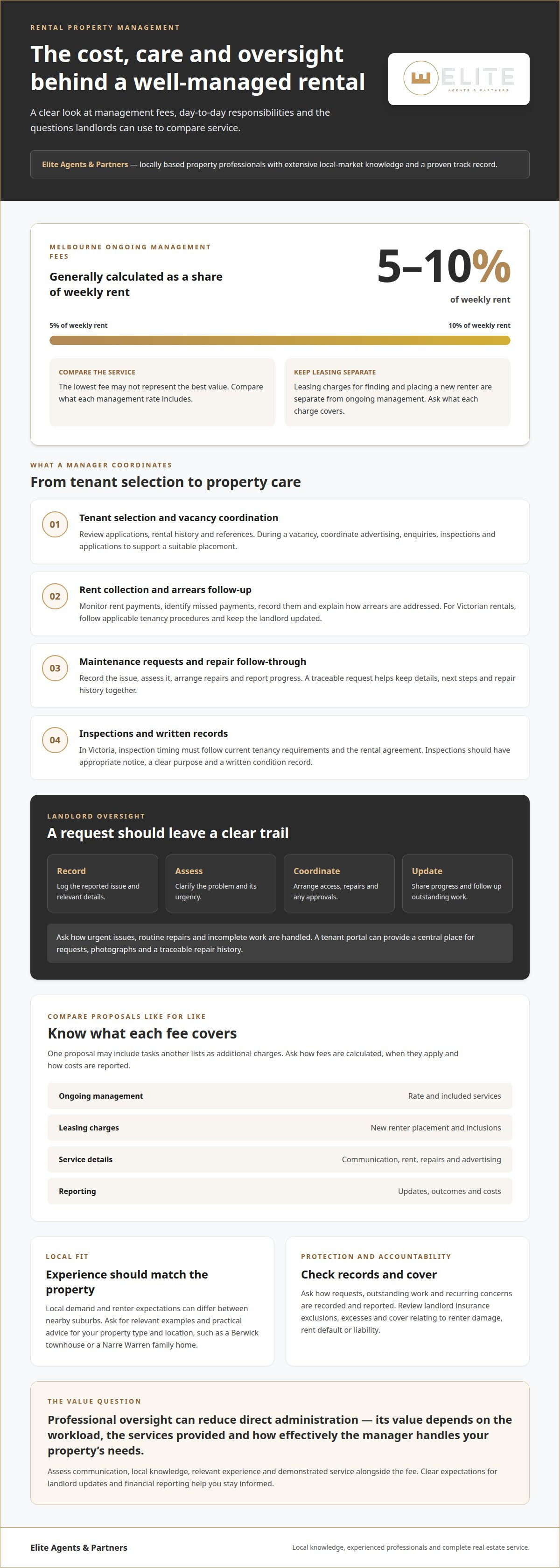
In Melbourne, ongoing property management fees generally range from 5% to 10% of weekly rent. Compare the services included alongside the rate, because the lowest fee may not represent the best value.
Comparing Managers and Costs
Start by understanding the proposed management fees and what the service covers. Separate ongoing management from any leasing charges for finding and placing a new renter, then ask what each charge includes. Check how the agreement treats communication, rent collection, maintenance coordination and vacancy advertising.
Compare services on a like-for-like basis. One proposal may include tasks that another lists as additional charges. Ask how fees are calculated, when they apply and how costs are reported. This gives you a clearer view of the service than judging proposals by a headline percentage alone.
Melbourne management fees can often be negotiated, but the service scope matters. A lower rate may not offer the same communication or accountability, so weigh cost against the support your property needs.
Fee Negotiation and Potential Savings
Discuss the proposed management fee in relation to your property and the services required. Clarify which tasks are included and whether charges apply when a renter changes or a new rental agreement begins. Keep the agreed fee structure in writing.
Leasing charges may be separate from ongoing management fees and can apply when an agency places a new renter. The amount and charging basis depend on the agreement. Confirm whether the charge covers advertising, inspections, application handling or lease administration, rather than assuming every agency bundles these tasks.
Understand the full fee schedule and avoid paying for services you don’t need. Review the arrangement alongside the manager’s communication, maintenance processes and vacancy support. A small difference in the management rate may matter less than unclear extra charges or a service scope that doesn’t fit your rental.
Landlord support and reporting
Useful support for rental providers combines accessible communication with reports that explain a property’s financial and maintenance position. Agree on the information you need, how updates will be delivered and who handles each decision.
A rent statement should help you trace income and expenses, not just show a balance. For example, it can distinguish rent received from management charges, repair invoices and other recorded property costs. Clear descriptions make it easier to understand payments and identify items that need follow-up.
Maintenance updates should connect the original request with the action taken. A report about a leaking kitchen tap, for instance, can record the issue, the repair arranged and whether further work remains. If approval is needed before work proceeds, clarify how the manager will present the options and record your decision.
Communication matters when a renter raises a concern or a payment falls behind. Ask how the manager shares the issue, records contact and explains the next step. A concise update should distinguish confirmed information from actions still underway, helping you make decisions without searching through scattered messages.
Reports are most useful when they’re consistent and easy to interpret. Check for key details such as rent received, outstanding amounts, invoices, inspection observations and maintenance follow-up. You should be able to connect each entry to a property event, such as a repair request or tenancy change.
Set expectations at the start of the management relationship. Confirm your preferred communication channel, who handles routine queries and how urgent matters are escalated. Agree how often you’ll receive financial statements and inspection updates, based on your needs and the service arrangement.
Before approving a repair, the manager should provide enough detail for an informed decision, including the issue, proposed work and relevant cost information. After completion, a brief update and supporting invoice can close the loop. This creates a clearer record for reviewing property expenses and any unresolved work.
Elite Agents & Partners: Property Management
Elite Agents & Partners provides property management for landlords seeking informed, consistent support with a Melbourne rental. Local market knowledge and personalised service help shape practical decisions around leasing, property care and communication, while keeping your interests central.
Turn to the team when you’re preparing a property for renters, reviewing its management or seeking clearer oversight of its ongoing needs. Elite Agents & Partners can discuss your property and the support you’re looking for, then tailor its approach to your priorities. If your plans change from renting to selling, residential property sales and property appraisals can help inform your next decision.
Contact Elite Agents & Partners to discuss your rental property management needs.
Make your next property decision with confidence
Your next step is to decide how involved you want to be in managing your rental day to day. If you’re looking for someone nearby, focus on a clear working relationship, practical local advice and support that fits your priorities as a rental provider.
Elite Agents & Partners offers Property Management, Residential Property Sales and Project Marketing. If your investment plans change, these services can support different property decisions over time. Start a conversation about your rental, what you expect from management and how you prefer to receive updates. This gives you a useful basis for discussing whether the arrangement suits your property and goals.
Take the next step when you’re ready to plan how your property will be managed.
Frequently Asked Questions
Have a property to lease?
A property manager can help prepare and market a residential property for rent. A rental appraisal helps set an asking rent by considering the property’s features, condition, location and comparable rentals. For example, a two-bedroom unit and a family home may attract different renter groups. A manager can also coordinate enquiries and applications during leasing.
What can you rent your property for?
Your asking rent depends on the home’s location, size, condition, features and current demand. A rental appraisal considers these details alongside comparable properties, giving you a grounded starting point for setting rent. For example, presentation and parking may affect how renters view similar homes in the same suburb. Rental appraisals inform pricing, but the final figure should reflect the property and local market.
What happens if my renter doesn’t pay rent?
If rent is missed, review the payment record and contact your property manager promptly. They can confirm whether the payment is outstanding or delayed, record communication and follow relevant Victorian tenancy procedures. Keep messages and payment information together, especially if the renter raises a concern or says payment has been made. Clear records help establish what happened and what action follows.
Why use professional property managers instead of self-managing?
Professional management can suit rental providers with limited time for renter communication, lease administration and maintenance coordination. For example, an owner balancing work and travel may prefer a manager to handle routine property matters and keep records organised. This requirement for dependable oversight applies across any market; for instance, investors holding overseas assets often rely on regional specialists like ARW Trading to coordinate tenancy and maintenance matters. Self-management gives you direct control, but also makes you responsible for ongoing administration. The right option depends on your availability and preferred level of involvement.
What are property management fees and letting fees in my area?
Property management fees cover ongoing work, while a letting fee may relate to placing a renter. The amount depends on the agreement and services included. Compare written fee schedules to see whether advertising, inspections, application handling and lease administration are included or charged separately. This helps distinguish a lower headline rate from the total cost of managing and leasing your property.
What services do Australian property managers provide?
Australian property managers can support leasing, renter applications, rent collection, lease administration, maintenance coordination and financial reporting. The precise service scope depends on the management agreement. In the Casey region, Elite Agents & Partners supports property owners in Berwick, Narre Warren, Narre Warren South, Narre Warren North, Hallam, Hampton Park, Dandenong, Doveton, Cranbourne, Cranbourne East, Clyde, Clyde North, Officer, Pakenham, Beaconsfield and Drouin.
Disclaimer
Disclaimer: This article was prepared with the assistance of artificial intelligence and reviewed for general informational purposes. While reasonable care has been taken to ensure accuracy, property-market conditions, prices, legislation and other information may change. The content does not constitute legal, financial, taxation, valuation or other professional advice. Readers should verify information and obtain advice appropriate to their circumstances before making property decisions. Elite Agents & Partners does not guarantee any specific sale price, rental return or outcome.


