

The most costly common mistakes when selling a house include setting an asking price above market expectations, choosing an agent based on commission alone and presenting the property poorly. An unrealistic price can keep a home on the market longer and weaken your negotiating position, while avoidable presentation issues may make buyers hesitate.
It’s understandable to want the highest possible sale price and to question whether preparing or styling your home is worth the expense. A better approach is to weigh local market evidence, an agent’s experience and the likely impact of each improvement before committing time or money.
This article explains how comparable sales and local conditions can inform your asking price, what to consider when selecting an agent, and which cleaning, decluttering and minor repairs can improve presentation. It also outlines how to weigh styling costs against buyer feedback and offers, so you can focus on changes that support your selling strategy rather than spending by default.
Key Takeaways
- Use recent comparable sales and local market conditions to guide your asking price, rather than relying on hearsay or emotion.
- Assess an agent’s local knowledge, experience and sales strategy alongside their commission.
- Declutter, clean and address visible maintenance issues to help buyers focus on the home’s strengths.
- Weigh staging costs against buyer feedback and the offers received before deciding whether further presentation changes are worthwhile.
1. Setting a realistic asking price
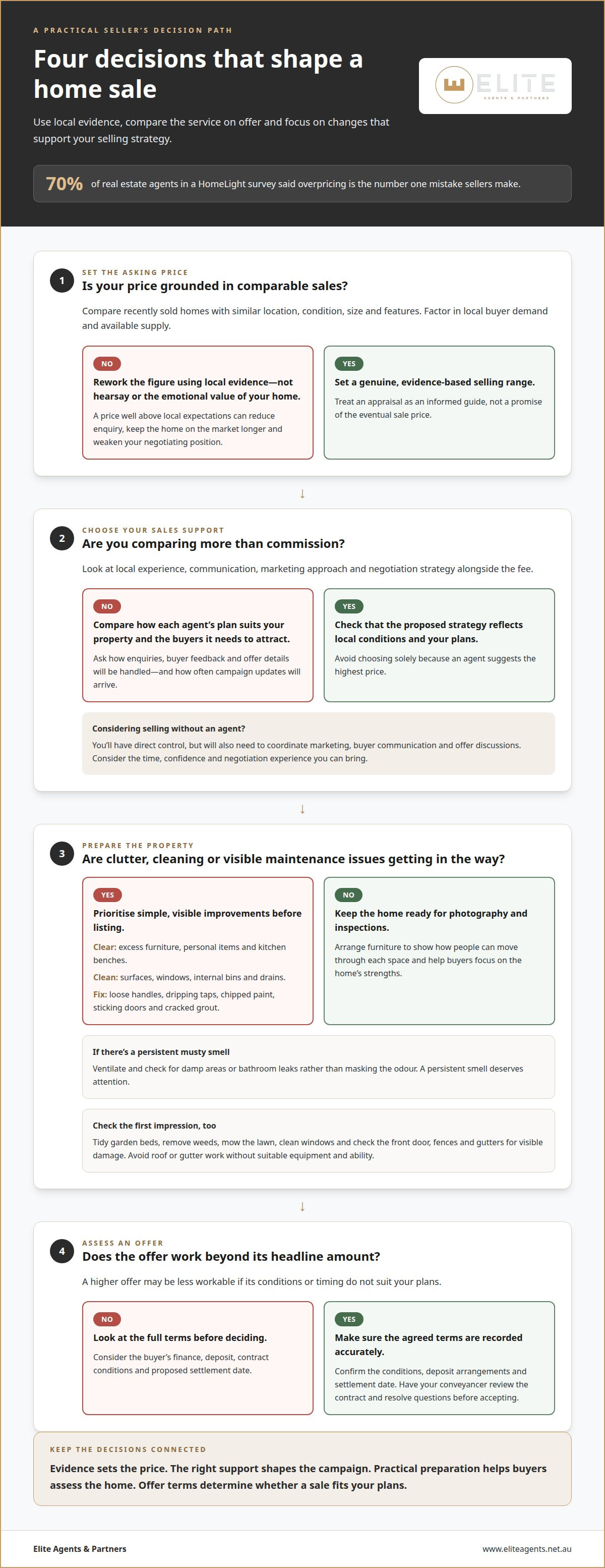
Overpricing can cost you more than time. A HomeLight survey found that 70 per cent of real estate agents say it is the number one mistake sellers make. Buyers compare online estimates with recent sales, so a price well above local expectations can reduce enquiry and weaken your position in negotiations.
Build your pricing around evidence, not the emotional value of a home you’ve lived in. Compare recently sold properties with a similar location, condition, size and features, then account for differences buyers will notice. Local conditions matter too: buyer demand and available supply affect how competitive your asking price needs to be. A local agent can use comparable sales and a sales appraisal to help you assess a realistic figure.
Treat a price appraisal as an informed guide, not a promise of the eventual sale price. Make sure the advertised guide reflects a genuine, evidence-based selling range. A low figure may attract attention, but a mismatch between the guide and your expectations can frustrate buyers and complicate negotiations. Set your price with a clear rationale, then review it if buyer feedback suggests the market is responding differently than expected.
Assess offers on more than the headline amount. Consider the buyer’s finance, deposit, contract conditions and proposed settlement date. A higher offer with conditions or timing that does not suit your plans may be less workable than a lower, simpler offer. To reduce settlement delays and contract errors, ensure the agreed terms, deposit arrangements and settlement date are recorded accurately, and have your conveyancer review the contract. Resolve questions about conditions before accepting rather than relying on assumptions.
Pricing is one of the common mistakes when selling a house because it can shape buyer interest from the outset. Use comparable evidence, a clear selling range and buyer feedback to keep your asking price grounded in the market.
2. Choosing an agent based on more than commission
A lower commission can look attractive, but it’s only one part of the decision. Compare each estate agent’s local experience, communication, marketing approach and negotiation strategy. Across residential property markets, established agencies like Team239 demonstrate how dedicated marketing and local expertise create far more value for sellers than simply cutting fees. Ask how their work with similar properties informs the proposed campaign, then consider whether the plan suits your home and the buyers it needs to attract.
Service matters throughout the campaign. Before choosing an agent, discuss how they’ll handle enquiries, share buyer feedback and keep you informed. Agree on how often you’ll receive campaign updates and how offer details will be explained. Clear communication helps you make informed decisions without feeling pressured.
Local knowledge brings useful context to real estate advice. An agent familiar with your area can explain how buyer demand, comparable properties and current market conditions shape a selling strategy. Review local agent profiles and consider which experience aligns with your property and plans for your next home.
Selling without an agent gives you direct control over enquiries and negotiations, but you’ll also need to coordinate marketing, buyer communication and offer discussions. An agent provides professional sales support; the right choice depends on the time, confidence and negotiation experience you can bring to the process. Avoid choosing based on commission alone or selecting an agent solely because they suggest the highest price.
Required sale documents and disclosure obligations vary between Australian states and territories and may depend on the property. Before signing, have a conveyancer review the contract and applicable disclosure material for your location.
Capital gains tax may apply when selling an Australian property, while the main-residence exemption may be available if eligibility conditions are met. Ownership and use history can affect the tax outcome, so have a registered tax agent assess your circumstances.
3. Decluttering, cleaning and minor repairs
Before listing, make each room easier to assess by removing excess furniture and personal items. Clear kitchen benches, pack away family photographs and arrange furniture to show how people can move through the space. These steps help buyers picture their own living arrangements and keep property photos from feeling crowded.
Clean systematically before inspections and photography. Wipe surfaces, clean windows, empty internal bins and clear drains. If a room smells musty, ventilate it and check for damp areas or bathroom leaks rather than masking the odour with fragrance. Mould can develop behind walls, between cavities and under floorboards, so a persistent smell deserves attention before it becomes a costly concern for buyers.
Walk through the property as if you were seeing it for the first time. Note loose handles, dripping taps, chipped paint, sticking doors and cracked grout. Fix straightforward interior issues before listing: several small defects can make buyers wonder whether maintenance has been neglected elsewhere. A fresh coat of light, neutral paint can also soften highly personalised walls and help rooms appeal to a broader audience.
Prioritise repairs by their visibility, function and likely effect on buyer confidence. A leaking tap or broken light is usually simpler to address than an extensive renovation, and cosmetic work won’t resolve a significant underlying problem. If a pre-listing inspection identifies concerns, use its findings to decide what needs attention and what can be disclosed during the sale process.
Kerb appeal starts before buyers enter. Tidy garden beds, remove weeds, mow the lawn, clean windows and check the front door, fences and gutters for visible damage. Prune overgrown hedges and add fresh mulch where garden beds look tired. Avoid taking on roof or gutter work without suitable equipment and ability, as working at height can be dangerous. These practical mistakes to avoid help sellers present well-maintained properties, build interest and achieve a stronger first impression.
4. Staging costs compared with sale offers
Styling is a selling expense, so weigh its cost against the likely benefit to your sale, not just the appeal of a styled room. Start with the property’s condition and presentation: an empty home can be difficult to picture, while a furnished home may need only selective changes. Focus on spaces where furniture placement, lighting or a clear layout helps buyers judge how they could use the home.
Separate essential preparation from optional styling. Cleaning, removing clutter and addressing visible maintenance issues can improve presentation without a full styling plan. In a furnished property, rearranging existing furniture or removing bulky pieces can open sightlines and make rooms feel more practical. Consider paid styling when a specific presentation problem remains, such as an empty living area that feels smaller than it is.
Before committing, ask what each proposed change is meant to achieve. A dining setting can show how the room works; neutral bedding can make a bedroom feel orderly. Match each recommendation to buyer feedback, property type and local conditions. Broad, expensive changes are harder to justify if buyers already respond positively to the home’s current condition.
Compare offers and feedback before and after presentation changes, while accounting for styling expenses and commission. Consider the offer terms as well as the headline price, since settlement timing and conditions can affect your plans for moving. If buyers repeatedly mention the same room or layout, targeted styling may address their concern. If feedback centres on location or pricing, more furnishings won’t resolve the underlying objection.
Set a spending limit before selling your home, then assess whether each styling choice supports a clear sales goal. Keep, adjust or remove items based on inspection responses and buyer interest. The practical takeaway is to style the home to address a presentation weakness, not simply because a styled property looks more polished. A targeted approach ties the decision to likely buyer appeal and the sale proceeds you want to protect.
Elite Agents & Partners: Houses for rent
Elite Agents & Partners can help homeowners in Berwick plan a residential property sale with local market knowledge, personalised service and a demonstrated record of performance. Turn to the team when you’re weighing a sale strategy, preparing to sell or deciding whether to retain your property instead.
For owners ready to sell, Residential Property Sales brings together guidance on positioning the home and managing the sales campaign. If keeping the property is a better fit for your plans, Elite Agents & Partners also offers Property Management and houses for rent, helping owners consider a rental pathway alongside selling.
Whether you’re preparing to sell or considering renting, contact Elite Agents & Partners to discuss your property plans.
Plan for the property move ahead
A sale is part of a wider property decision. Consider what you want the proceeds, timing and next steps to make possible, whether you’re moving to another home, retaining an investment or preparing for a future project. This broader perspective can keep your choices aligned with your plans as you decide what comes next.
One of the common mistakes when selling a house is treating the campaign as separate from those plans. Elite Agents & Partners is a trusted, locally based agency with extensive knowledge of the Berwick property market, experienced professionals and a demonstrated record of performance. Its personalised approach can help you consider the property decisions ahead.
With a clear plan and informed local guidance, you can move forward with confidence.
Frequently Asked Questions
What are the most common mistakes when selling a house in Australia?
Common mistakes include setting an asking price without enough market evidence, choosing an agent based on commission alone and leaving preparation until listing photos are due. Another is making expensive presentation changes without a clear reason. For example, if buyer feedback focuses on the home’s layout, adding decorative accessories may not address the concern. Base decisions on evidence, buyer responses and your selling priorities.
How should Australian sellers choose a real estate agent and compare commission rates?
Compare the service behind each commission, not just the percentage or amount. Ask how the proposed campaign will reach buyers, what communication to expect, and how the agent will report feedback and negotiate offers. Check that the agency agreement clearly records the commission, services, marketing costs and terms. Choose an agent whose local experience and approach suit your property and preferred level of involvement.
How do you set the right asking price for a house in Australia?
Start with recent sales of comparable homes, then adjust for differences such as condition, land, layout and location. For example, a renovated kitchen may distinguish your home from a similar nearby sale, but it doesn’t automatically justify a particular premium. A local sales appraisal can add context about buyer demand and competing listings. Treat the asking price as a strategic guide, then use enquiries and inspection feedback to assess buyer response.
What are the costs and fees of selling a house in Australia?
Selling expenses can include the agent’s commission, marketing, conveyancing, repairs or styling, and moving costs. Which costs apply depends on the property, campaign and sale arrangements. Before listing, ask for an itemised explanation of proposed campaign expenses and how commission is calculated, then review the agency agreement carefully. Keep a separate allowance for preparation and moving so these expenses don’t blur your view of the expected proceeds.
What are the rules for property advertising, claims and misleading conduct in Australia?
Keep every property description, photograph and campaign claim accurate and supportable. Check details such as room counts, inclusions, renovations and property features against reliable records before publication. Avoid wording that could mislead buyers, including claims about future value or guaranteed outcomes. Ask the selling agent to review campaign material for accuracy, and discuss disclosure questions with your conveyancer before the contract is prepared.
How should sellers prepare, repair and stage a house before listing?
Begin with a room-by-room walk-through and note what buyers will see in photographs and at inspections. Remove distracting personal items, clear surfaces and arrange furniture to show each room’s purpose. Fix straightforward faults, such as a loose handle or dripping tap, and prioritise issues that affect function or buyer confidence. Consider styling only where it solves a specific presentation problem, rather than furnishing every room by default.
Disclaimer
Disclaimer: This article was prepared with the assistance of artificial intelligence and reviewed for general informational purposes. While reasonable care has been taken to ensure accuracy, property-market conditions, prices, legislation and other information may change. The content does not constitute legal, financial, taxation, valuation or other professional advice. Readers should verify information and obtain advice appropriate to their circumstances before making property decisions. Elite Agents & Partners does not guarantee any specific sale price, rental return or outcome.


