

Could a faded wall or worn carpet really justify a repair bill at the end of a tenancy? It’s a common source of uncertainty, and what is considered fair wear and tear in a rental depends on more than the mark itself. Everyday use and natural ageing differ from damage caused by misuse or an accident, but the property’s condition at the start of the rental matters too.
If you’re unsure who should organise or pay for a repair, clear evidence can help bring the issue into focus. This guide explains how ordinary wear differs from renter-caused damage, and how to approach a disagreement fairly in Victoria. Elite Agents & Partners is a locally based Berwick agency providing property management support. Use these steps to assess a concern calmly, and refer to current Victorian guidance for questions about legal requirements.
Key Takeaways
- What is considered fair wear and tear in a rental depends on ordinary use, ageing and the circumstances, not appearance alone.
- Compare changes carefully: faded curtains may reflect ageing, while tears, stains or burns may point to damage, depending on the evidence.
- Review the initial condition record, take clear dated photos and describe the concern calmly when discussing next steps.
- A property manager can help keep inspection records organised, coordinate maintenance and support clear communication for renters and rental providers.
What Is Considered Fair Wear and Tear in a Rental Property?
Fair wear and tear is gradual change to a property or its fittings caused by ordinary use, ageing or environmental exposure. A change in appearance alone doesn’t show that a renter caused damage. Sunlight may fade a surface over time, for example, while the circumstances and the item’s earlier condition help determine whether a particular change goes beyond normal deterioration.
Fair wear and tear is gradual deterioration resulting from everyday use, the natural ageing of a property or exposure to environmental conditions.
By contrast, damage may arise from careless, intentional or avoidable conduct by a renter or their visitors. The distinction depends on the evidence and context, not simply on whether something looks different. The general concept of wear and tear describes deterioration through use, but current Victorian guidance takes precedence when assessing a rental in Victoria.
Why fair wear and tear is not a fixed checklist
There’s no single list that settles every situation. The property’s previous condition, age, materials, length of use and exposure to sunlight or weather can all affect how a change should be viewed. A mark, stain or worn surface isn’t conclusive by itself. Consider its size, location and possible cause, then compare it with the original condition. These are general considerations, not a determination of any particular rental agreement or dispute.
Why Victorian context matters
Rental rules and guidance can differ between Australian states and territories, so advice written for another state may not apply to a Berwick tenancy. For Victorian requirements, refer to current information from Consumer Affairs Victoria. This section offers general educational information only. Use current official guidance when considering a specific situation, and seek appropriate advice if you need an assessment of your rental agreement.
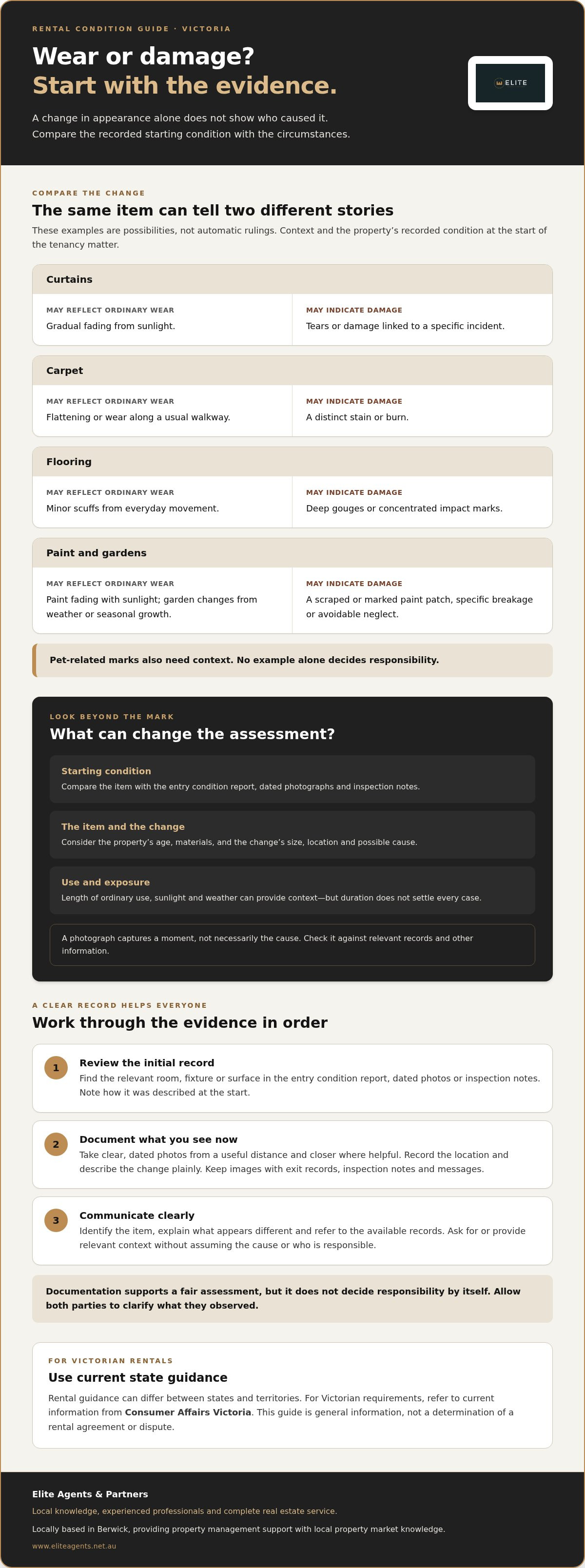
Fair Wear and Tear vs Damage: How Common Rental Examples Compare
The difference often lies in how a change developed. The examples below are illustrative, not automatic rulings. They can help frame what is considered fair wear and tear in a rental, but the property’s recorded starting condition and the circumstances still matter.
| Feature | May reflect ordinary wear | May indicate damage |
|---|---|---|
| Curtains | Gradual fading from sunlight | Tears or damage from a specific incident |
| Carpet | Flattening or wear along a usual walkway | A distinct stain or burn |
| Flooring | Minor scuffs from everyday movement | Deep gouges or concentrated impact marks |
Context and the recorded condition at the start of a tenancy shape how each change should be assessed; no example alone decides responsibility.
Examples involving surfaces, fixtures and gardens
Paint that gradually fades with sunlight differs from a patch that appears to have been scraped or marked in a particular incident. Carpet can show general use, while a localised mark may call for closer consideration of its cause. A garden may change with weather and seasonal growth; a specific breakage or avoidable neglect may raise different questions. Pet-related marks also need context, rather than an automatic assumption either way. For a Victorian rental, use current state guidance to inform your assessment.
What can change the assessment?
Consider the entry condition, the nature and location of the change, how it may have occurred and how long the item was in ordinary use. Duration can provide context, but it doesn’t settle every case. A photograph captures a moment, not necessarily the cause, so compare it with relevant condition records and other information before drawing conclusions. Distinguishing between gradual decline and unexpected incidents is also vital when managing property risks, where independent brokers such as Just Quote Me help property owners secure bespoke insurance solutions against sudden damage.
For Berwick rental providers who need practical support with inspections, condition reporting and renter communication, Elite Agents & Partners provides local property management services.
How to Document Rental Condition and Discuss a Wear-and-Tear Concern
A clear record helps renters and rental providers discuss a change using the same information. If you’re weighing what is considered fair wear and tear in a rental, work through the evidence in order before drawing conclusions.
- Review the initial record. Check the entry condition report and any dated photographs or inspection notes. Find the relevant room, fixture or surface, and note how its condition was described at the start.
- Document what you see now. Take clear, dated photographs from a useful distance and, where helpful, a closer view. Record the item’s location and describe the change plainly. Keep relevant exit condition records, inspection notes and messages together with the images.
- Communicate clearly. Identify the specific item, explain what appears different and refer to the records available. Ask for or provide relevant context without assuming how the change occurred or who is responsible.
Documentation supports a fair assessment, but it doesn’t decide responsibility by itself. Consider the records alongside the circumstances and allow both parties to clarify what they observed.
Use entry and exit condition records carefully
Compare the starting and ending records item by item, rather than relying on a general impression of the property. Check that photographs show enough detail to identify the location, and keep their dates clear. Storing images with inspection notes and related communication makes it easier to track what was recorded and when. Consistent property management practices can help keep these records organised, as discussed in the property management in Berwick guide.
Keep the conversation practical and calm
Start with the item and the evidence, then invite a response or clarification. If the disagreement remains, consult current Consumer Affairs Victoria information for guidance relevant to Victoria.
How a Property Manager Can Help Assess Fair Wear and Tear
A property manager can help keep the process organised, but their role isn’t to treat every change as a claim against a renter. A well-kept record can help both parties understand what was noted, what has changed and whether a repair request needs attention. The question of what is considered fair wear and tear in a rental should be approached impartially, with the available records and circumstances in view.
What clear property management can contribute
Move-in and move-out inspections create opportunities to record the property’s condition at different points in the tenancy. Consistent condition reporting makes those records easier to compare and can support a clear discussion between renter and rental provider. It also helps keep routine maintenance concerns distinct from questions about responsibility.
Clear renter communication helps keep requests specific: which item needs attention, what has changed and when the issue was noticed. A property manager can coordinate repair requests through Maintenance and Repairs, while Lease Administration supports the organised handling of rental records. Neither process should turn an unassessed concern into an assumption of fault.
When local property management support may be useful
For rental providers in Berwick, a property manager can coordinate inspections, maintain condition records and keep communication with renters clear and documented. This can be useful when a property has several maintenance matters to track or when entry and exit records need to be reviewed together. Renters can also benefit from a clear channel for raising concerns and sharing relevant information.
Elite Agents & Partners is based in Berwick and provides residential property management, including inspections, condition reporting, renter communication and maintenance coordination. The agency serves Berwick, Narre Warren, Narre Warren South, Narre Warren North, Hallam, Hampton Park, Dandenong, Doveton, Cranbourne, Cranbourne East, Clyde, Clyde North, Officer, Pakenham, Beaconsfield and Drouin.
Make Your Next Rental Discussion More Straightforward
A useful next step is to make condition records part of routine rental management, rather than revisiting them only when a tenancy is ending. Clear, consistent notes can give renters and rental providers a shared reference point and help keep maintenance conversations practical. For property investors also exploring the short-stay market, setting clear expectations early through strategic vacation rental copywriting can similarly help attract conscientious guests and minimise property disputes. If questions arise about what is considered fair wear and tear in a rental, return to the evidence and current Victorian guidance before deciding how to proceed.
For rental providers, a property manager can help establish an organised approach to inspections and communication. Elite Agents & Partners provides residential property management in Berwick, with practical support for managing rental properties and keeping communication clear.
A calm, well-documented process gives everyone a clearer way forward. Contact Elite Agents & Partners to discuss professional property management for your rental.
Frequently Asked Questions
Is fair wear and tear different from damage in a Victorian rental?
Yes. Fair wear and tear generally refers to gradual change associated with ordinary use, ageing or exposure; damage more often follows a particular harmful event or careless action. These are guides, not automatic conclusions: the same mark may be viewed differently depending on its cause and recorded condition. Victorian requirements can differ from those in other states, so consult current Consumer Affairs Victoria information. This is general information, not legal advice.
Can a rental provider charge a renter for faded paint or worn carpet?
Not automatically. Faded paint or flattened carpet may be consistent with ordinary use, but the label alone doesn’t settle whether a rental provider can seek payment. Compare the item’s entry record with its present condition, and consider the extent and apparent cause of the change. If you’re asking what is considered fair wear and tear in a rental, check current Victorian guidance before deciding responsibility or discussing any bond claim.
What happens if the entry and exit condition reports do not match?
A difference between reports can help pinpoint which item or area changed during the tenancy, but it doesn’t identify the cause or responsible party by itself. Check that both records describe the same location and detail, then compare relevant inspection notes, dated images and messages. If a record is unclear or incomplete, note that gap during the discussion. For an unresolved disagreement, consult current Consumer Affairs Victoria guidance.
Are small marks on walls considered fair wear and tear?
Small wall marks need to be assessed in context, so size alone doesn’t settle the question. Consider how the wall was recorded at the start of the rental and whether the marks appear gradual or linked to a particular action. Review any room-specific notes and images before reaching a view. If renter or rental provider responsibility remains disputed, refer to current Consumer Affairs Victoria guidance.
Does fair wear and tear apply to damage caused by a pet in a rental?
It depends on the change, its likely cause, the property’s recorded condition and current Victorian requirements. A pet-related mark isn’t automatically ordinary wear, nor does its presence alone establish renter-caused damage. Record what can be observed and compare it with the relevant starting condition information. Renters and rental providers in Berwick can consult current Consumer Affairs Victoria guidance if responsibility remains unclear.
Disclaimer
Disclaimer: This article was prepared with the assistance of artificial intelligence and reviewed for general informational purposes. While reasonable care has been taken to ensure accuracy, property-market conditions, prices, legislation and other information may change. The content does not constitute legal, financial, taxation, valuation or other professional advice. Readers should verify information and obtain advice appropriate to their circumstances before making property decisions. Elite Agents & Partners does not guarantee any specific sale price, rental return or outcome.


