

What helps resolve an end-of-lease cleaning disagreement? Often, it is not a spotless-property checklist but evidence showing how the home changed during the tenancy. When end of lease cleaning disputes arise, it’s understandable to worry that “clean” means something different to you and your rental provider, or that an unfair bond claim will be difficult to challenge. Comparing the property’s documented condition at the start and end of the tenancy can move the discussion from assumptions to facts.
This guide explains which records can help, how to raise a cleaning concern clearly and calmly, and where to find current Victorian guidance on resolving a disagreement. You’ll learn how to organise condition reports, photographs and messages into an evidence-led response, and where to find information from Consumer Affairs Victoria, Rental Dispute Resolution Victoria and VCAT.
Elite Agents & Partners is based in Berwick and provides property management support, including move-in and move-out inspections and clear communication. Our local service area includes Berwick, Narre Warren, Narre Warren South, Narre Warren North, Hallam, Hampton Park, Dandenong, Doveton, Cranbourne, Cranbourne East, Clyde, Clyde North, Officer, Pakenham, Beaconsfield and Drouin.
Key Takeaways
- Assess end of lease cleaning disputes using tenancy records and the specific cleaning concern, rather than assumptions.
- Organise available reports, dated photos and written messages so each item clearly relates to a room or surface.
- Raise concerns calmly in writing, share relevant evidence and suggest a practical response. Keep a record of any agreement.
- Consistent handover records and clear communication can help prevent misunderstandings. Professional property management can support this through Lease Administration and Legal Compliance and Risk Management.
What causes end-of-lease cleaning disputes in Victoria?
An end-of-lease cleaning dispute is a disagreement at handover about whether the property is clean enough, what the evidence shows or who is responsible for a particular issue. A concern or bond claim alone doesn’t prove a breach. Assess the property against Victorian requirements and the tenancy records, including the ingoing condition report and any relevant agreement terms.
Keep cleaning concerns separate from damage, repairs and ordinary wear. Dust or grease left on a surface may raise a cleaning question; a broken fitting or maintenance issue is different. Faded paint or worn carpet from normal use may be wear and tear, rather than evidence that extra cleaning is needed. Describe and support each concern on its own terms.
What cleaning standard applies at the end of a Victorian tenancy?
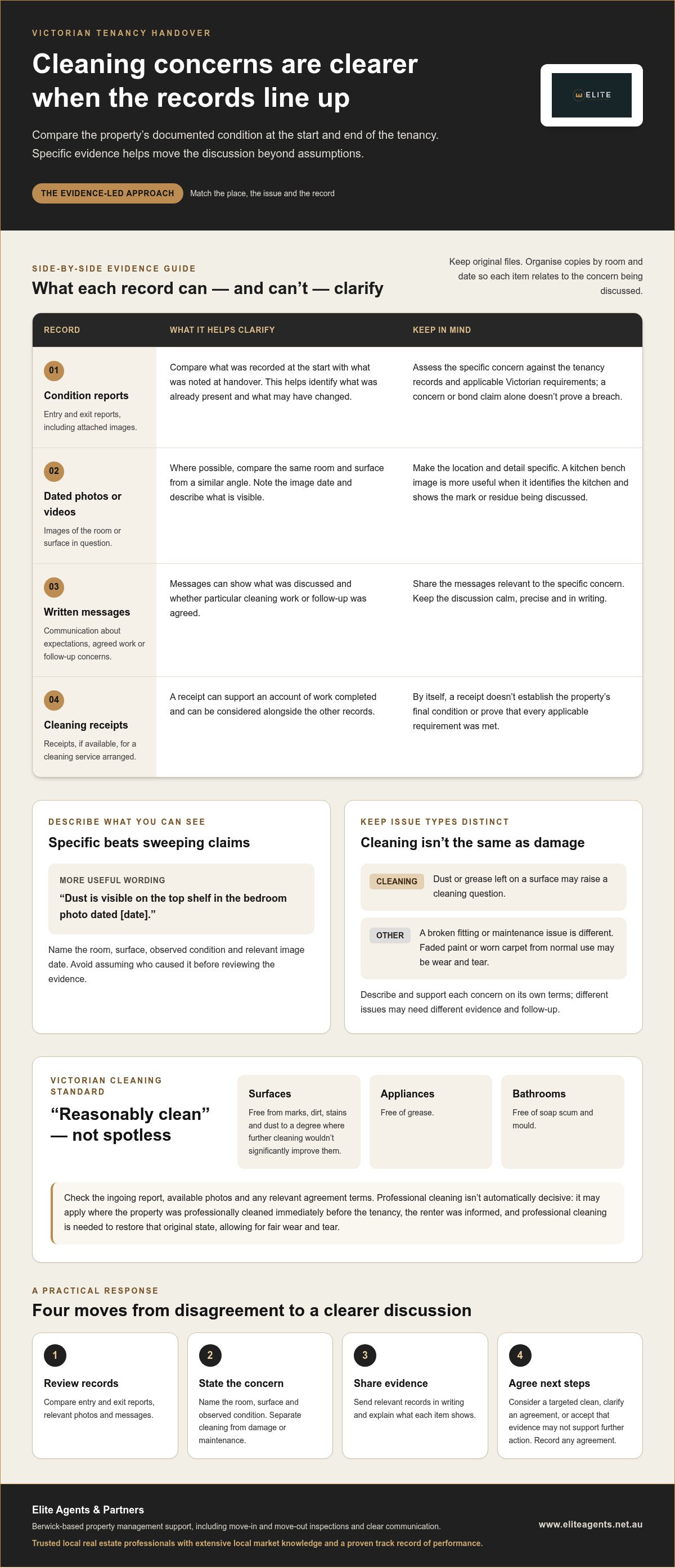
Consumer Affairs Victoria’s guidance describes the required standard as “reasonably clean”, rather than spotless. It should reflect average community standards. For example, surfaces should be free from marks, dirt, stains and dust to a degree where further cleaning wouldn’t significantly improve them. Appliances should be free of grease, and bathrooms free of soap scum and mould.
Start by checking the property’s condition at the beginning of the tenancy. Use the ingoing report and available photos to identify what was already present, then compare them with the end-of-tenancy condition and any agreed terms. A requirement for professional cleaning isn’t automatically decisive. It may apply where the property was professionally cleaned immediately before the tenancy, the renter was informed, and professional cleaning is needed to restore that original state, allowing for fair wear and tear.
A cleaning disagreement is a difference of view; a proven breach requires evidence that the applicable standard wasn’t met. This Victorian context sits within broader landlord-tenant law, but examples from other states shouldn’t be treated as Victorian rules. For local rental providers, consistent move-in and move-out inspection records can help make the handover clearer.
How do condition reports and photos help resolve cleaning disputes?
In end of lease cleaning disputes, records help both parties assess a specific concern against what was documented earlier, rather than relying on memory. Gather available entry and exit condition reports, dated photographs, relevant messages and any cleaning receipts. Together, these can show what was recorded, what changed and what was discussed about work to be completed.
Matched, dated records are more useful than unsupported recollections because they let both parties compare the same place and issue over time. Where possible, pair images of the same room and surface, taken from a similar angle. Note the image date and describe what is visible. For example, a kitchen bench photo is more useful when it identifies the kitchen and shows the specific mark or residue being discussed.
Which records should each party organise?
Keep original files and organise copies by room and date. A simple folder structure makes the evidence easier to review:
- Entry and exit condition reports, including any attached images.
- Dated photos or videos showing the area being discussed.
- Messages about cleaning expectations, agreed work or follow-up concerns.
- Cleaning receipts, if available, as evidence that a service was arranged.
A receipt can support an account of work completed, but it doesn’t establish the property’s final condition or show by itself that every applicable requirement was met. Consider it alongside the reports, images and communications.
How should the parties describe a disputed cleaning issue?
Use neutral, precise wording: identify the room, surface, observed condition and relevant image date. For example, “Dust is visible on the top shelf in the bedroom photo dated [date]” is more useful than “the whole property was left filthy”. Avoid treating an observation as proof of who caused it. Record cleaning concerns separately from damage or maintenance issues, as they may need different evidence and follow-up. Clear, consistent inspection records are a practical part of property management for Berwick rental providers.
How to resolve an end-of-lease cleaning dispute step by step
A measured, evidence-led exchange can help renters and rental providers clarify what’s in dispute and consider a practical response. For end of lease cleaning disputes, keep each issue specific and communication respectful, even if you disagree about what the records show.
- Review the tenancy records. Compare the entry and exit condition reports, relevant photos and messages. Identify what was recorded at the start and what is visible at handover.
- Describe the concern precisely. State the room, surface and observed condition. Keep cleaning concerns separate from damage or maintenance issues, and avoid assuming who is responsible before reviewing the evidence.
- Share relevant evidence in writing. Send the other party the records that relate to the concern and explain what each item shows. Invite a response to the specific evidence rather than making broad claims.
- Propose a practical response. Depending on the issue and records, this might mean discussing a targeted clean, clarifying an existing agreement or accepting that the evidence doesn’t support further action. Record any agreement, including what will happen next.
Review the records, identify the issue, share the evidence and discuss a practical next step. This sequence supports a constructive conversation, but it can’t guarantee agreement or a particular bond outcome.
What if the renter and rental provider cannot agree?
Check current Consumer Affairs Victoria guidance for information relevant to your situation. For bond disputes, current Victorian official guidance describes the pathway as starting with Rental Dispute Resolution Victoria (RDRV), a mediation service provided by VCAT. If the parties don’t reach agreement there, the matter proceeds to a VCAT hearing. Check the latest instructions and eligibility requirements before taking a formal step, as processes can change. This article provides general information, not legal advice.
Clear communication and well-organised inspection records are part of effective property management. Elite Agents & Partners supports local rental providers through lease administration, inspections and tenant relations.
How Victorian property management can prevent repeat cleaning disputes
Clear expectations at the start and end of a tenancy can make handovers more orderly. Consistent inspection records, specific notes about the property’s condition and prompt communication help renters and rental providers address questions while details are fresh. These practices may reduce misunderstandings, though they can’t prevent every disagreement or guarantee a bond outcome.
For local rental providers, professional property management can bring these steps together. Elite Agents & Partners supports rental properties through Lease Administration and Legal Compliance and Risk Management. Move-in and move-out inspections help create a record of the property’s condition, while tenant relations supports clear communication about concerns and agreed follow-up. This is practical support for managing end of lease cleaning disputes, not a substitute for a formal decision-maker.
What can a property manager do during a handover?
A property manager can organise inspection records, describe each concern by location and observed condition, and keep relevant communications together. For example, a note about a kitchen surface is more useful when it identifies the specific area and links to a dated inspection record. A manager can also help clarify what has been raised and document any response or agreement. These records support discussion; they don’t decide a legal dispute or determine a bond claim.
When should a rental provider seek management support?
If handover concerns or communication difficulties recur, a rental provider may benefit from professional support with inspection coordination, lease administration and tenant communication. Elite Agents & Partners is based in Berwick and provides local property management informed by knowledge of the area. For a closer look at property management in Berwick, consider how structured records and clear communication could support your rental property. Good processes make expectations easier to follow and issues easier to discuss, without promising a particular outcome.
Set up your next handover for greater clarity
Use a cleaning disagreement as a prompt to make the next tenancy’s handover process clearer from the outset. Before a renter moves in, consider how expectations will be recorded, how concerns should be raised and where inspection information will be kept. A consistent approach can make communication more straightforward and provide a useful reference if questions arise later.
For rental providers, managing end of lease cleaning disputes is one part of maintaining an organised tenancy. A considered property management approach can help keep administration and communication on track, while leaving formal decisions to the appropriate Victorian dispute-resolution body. Choose practical processes that suit your property and apply them consistently at each handover.
With clear expectations and thoughtful preparation, you can approach the next handover with greater confidence.
Frequently Asked Questions
Can a rental provider claim cleaning costs from a renter's bond in Victoria?
Yes, a rental provider can seek cleaning costs from a renter’s bond if evidence supports the claim and the renter is responsible for the cleaning required. Under the process effective from 13 October 2026, the rental provider must notify the renter and provide supporting evidence, such as photos, invoices or quotes, before making a bond claim. A claim isn’t proof that a deduction is justified.
What evidence helps with an end-of-lease cleaning dispute?
For end of lease cleaning disputes, a useful evidence file brings together records relating to the particular concern. Include condition reports, dated images and relevant messages, then add a brief timeline showing when the concern was raised and what each party said or did. Keep original files where possible, and label copies clearly so someone reviewing the issue can identify the room, date and source.
Does a renter have to pay for professional end-of-lease cleaning?
No, not automatically. A professional-cleaning requirement may apply if the property was professionally cleaned immediately before the tenancy, the renter was informed, and professional cleaning is necessary to restore it to that original condition, allowing for fair wear and tear. A blanket clause alone generally doesn’t make professional cleaning compulsory. Check the rental agreement and available records, and consult current Consumer Affairs Victoria guidance if the wording is unclear.
What should I do if the rental provider says the property was not clean enough?
Ask the rental provider to identify the specific areas they say need attention and provide the supporting evidence for any proposed bond claim. Reply in writing, addressing each point separately and attaching relevant records or images of your own. If you disagree, explain why and suggest a practical way to resolve the issue. Keep copies of the exchange and check current Victorian guidance before deciding on a formal next step.
Can an end-of-lease cleaning dispute go to VCAT?
Yes. For a Victorian bond dispute, the current pathway starts with Rental Dispute Resolution Victoria (RDRV), a mediation service provided by VCAT. If the parties don’t reach agreement at RDRV, the matter automatically proceeds to a VCAT hearing. A renter can initiate a bond claim through the RTBA after vacating; if the rental provider contests it, check the current RTBA and VCAT instructions for the applicable steps and time limits.
Disclaimer
Disclaimer: This article was prepared with the assistance of artificial intelligence and reviewed for general informational purposes. While reasonable care has been taken to ensure accuracy, property-market conditions, prices, legislation and other information may change. The content does not constitute legal, financial, taxation, valuation or other professional advice. Readers should verify information and obtain advice appropriate to their circumstances before making property decisions. Elite Agents & Partners does not guarantee any specific sale price, rental return or outcome.


