

Selling an investment property with tenants in Victoria is possible, and the renter doesn’t have to leave simply because the property is for sale. The tenancy can continue after settlement, with the buyer taking over as rental provider. For buyer inspections, written notice is required, and renters must receive compensation for each sales inspection of half a day’s rent or A$30, whichever is more.
It’s understandable to wonder whether you can market an occupied home smoothly while respecting the renter’s rights. The key is to plan the sale around the tenancy, communicate clearly and arrange access in line with Victoria’s rules.
This guide explains what happens to a lease when a property sells, the notice needed for advertising and inspections, and how inspection compensation works. It also covers how an agent and property manager can coordinate the campaign, and how the likely buyer’s plans, to live in the home or keep it as a rental, can shape your sale strategy.
Key Takeaways
- You can sell a tenanted rental in Victoria, and the lease can continue with the buyer after settlement.
- Plan access carefully: renters must receive notice before sale-related inspections, and inspection times have limits.
- Budget for required compensation of half a day’s rent or A$30 per sales inspection, whichever is more.
- An agent and property manager can help coordinate the campaign, renter communication and buyer information around the tenancy.
Notice of intention to sell
In Victoria, plan sale-related access separately from any notice to vacate. Written notice periods depend on whether the visit is for a valuation, advertising or a buyer inspection.
Entry notices for valuations and advertising
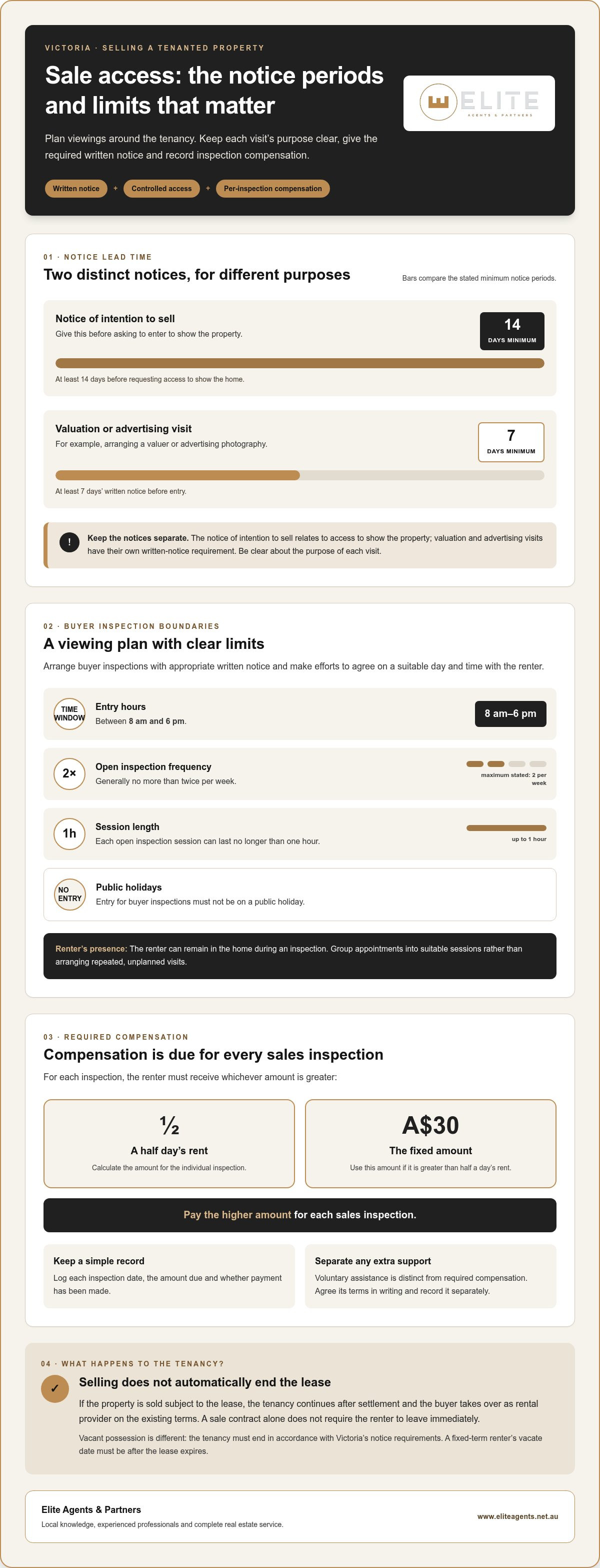
A valuation or advertising visit requires at least 7 days’ written notice before entry. This gives the renter time to prepare and helps you schedule photography or a valuer without disrupting the tenancy unnecessarily.
There’s also a separate notice of intention to sell: give it at least 14 days before asking to enter to show the property. Keep the purpose of each visit clear, since a valuation, advertising photos and buyer inspections have different notice requirements.
Notice timing for different tenancies
The notice of intention to sell relates to access, not an instruction to vacate. If you want vacant possession after a sale, the tenancy must be ended in accordance with the applicable notice requirements. For a fixed-term tenancy, the vacate date must be after the lease expires.
Where a sale contract has been signed, the notice to vacate must be given within 14 days of signing, or when all contract conditions have been met. A fixed-term renter can therefore remain until the agreement ends, even if settlement is earlier. Keep access notices distinct from notices that seek to end a tenancy.
Access for sales and buyer inspections
Arrange buyer inspections with appropriate written notice. Entry must be between 8 am and 6 pm, not on a public holiday. Open inspections can generally occur no more than twice per week, with each session lasting no longer than 1 hour.
Make efforts to agree on a suitable day and time with the renter. They can remain in the home during an inspection. These limits shape the campaign calendar, so group buyer appointments into suitable sessions rather than arranging repeated, unplanned visits. Buyer demand across Victoria can influence campaign timing, so plan viewing sessions around likely enquiry patterns.
Can a Rental Property Be Sold During a Tenancy?
Yes. In Victoria, you can sell a rental property while it’s occupied. The renter doesn’t have to leave simply because the owner decides to sell. The key decision is whether the property is offered subject to the lease or with vacant possession.
Costs and tax implications depend on the sale arrangements and the property’s ownership and use. Selling expenses may include campaign and transaction costs, and a sale may have capital gains tax implications. The tax outcome depends on the owner’s circumstances.
A buyer who takes over an existing tenancy becomes the new rental provider at settlement. The rental agreement continues on its existing terms, and the new owner assumes the rental provider’s responsibilities. A fixed-term lease doesn’t automatically end when the property sells. For example, if the agreement still has months to run at settlement, the buyer takes over that term unless the renter and rental provider mutually agree to end it earlier.
Vacant possession is different. The contract must state that the buyer is to receive the property without the renter, and the tenancy must end in accordance with Victoria’s notice requirements. As outlined above, a fixed-term renter’s vacate date must fall after the lease expires. A sale contract alone doesn’t require the renter to leave immediately.
An early end to the tenancy can be negotiated, but both the renter and rental provider must agree. Put the agreement in writing, including the vacate date, so the renter, seller and buyer have a clear record. If the tenancy continues after settlement, give the renter the buyer’s name and address, along with instructions for future rent payments.
Renter compensation for sales inspections
In Victoria, the renter must receive compensation for each sales inspection: half a day’s rent or A$30, whichever is more. The amount is calculated separately for every inspection, so record each appointment and payment. For example, if half a day’s rent exceeds A$30, that higher amount applies. This statutory compensation is distinct from any additional arrangement offered for disruption during the real estate campaign.
Agree in writing how any extra support will work, including what it covers and when it will be provided. A rental provider may offer a set amount per inspection or a broader financial arrangement. Keep that agreement separate from required inspection compensation. Clear records help everyone understand what has been paid, particularly if the campaign includes several buyer visits during the notice period.
A renter may also seek compensation if their belongings are damaged or stolen during an inspection. In those circumstances, they may apply to VCAT. Before the first viewing, document the property’s condition and agree how concerns will be reported. If an incident occurs, preserve relevant records, such as dated photos, messages and inspection details. This gives VCAT information about the loss and the circumstances.
If the landlord fails to pay the required inspection compensation, the renter can contact Consumer Affairs Victoria on 1300 558 181 about a complaint. Keep a simple log showing each inspection date, the amount due and payment status. That record helps identify missed compensation promptly. If you intend to offer extra support, explain its terms before viewings begin, then record payments separately. A clear process supports a more orderly campaign without confusing statutory compensation with voluntary assistance.
Real estate agent and property manager assistance
Coordinating the sales campaign with property management can make a tenanted sale easier to organise. The real estate agent handles buyer enquiries and campaign presentation, while the property manager coordinates communication with the renter. Agree on responsibilities before the first open for inspection to avoid mixed messages about access, renter concerns and buyer follow-up.
Start with a shared campaign calendar. Record proposed viewing windows, notice dates, valuation or photography appointments, and who will communicate any changes. Two set viewing times per week can consolidate buyer appointments instead of interrupting the renter with scattered requests. The agent can relay buyer interest and feedback, while the property manager keeps renter communications and tenancy matters organised.
Presentation needs a practical plan, not assumptions about the renter’s role. Discuss how the home can be shown in reasonable condition, identify any maintenance to address, and agree who will handle each task. Rental providers must continue meeting maintenance and repair obligations during the tenancy and sales campaign. For example, a reported repair should remain on the property manager’s work list while the agent prepares for viewings.
Buyer information matters as much as presentation. The agent can prepare accurate details about the rental agreement, rent and tenancy status, then explain whether the property is offered subject to the lease or with vacant possession. The property manager can keep tenancy records current and coordinate relevant information for the sales campaign. Once the sale contract is signed, clear communication helps everyone manage the transition and any continuing tenancy responsibilities.
For the owner, the main benefit is having a clear point of contact for each part of the process. Before marketing begins, agree who will handle renter updates, inspection scheduling, buyer questions and maintenance follow-up. This simple division helps keep the campaign organised and the tenancy properly managed.
Elite Agents & Partners: Property Management
Elite Agents & Partners can help landlords plan a sale while managing an ongoing tenancy. Its Property Management and Residential Property Sales services bring tenancy coordination and the sales campaign together, helping you plan communication, presentation and buyer access around the renter’s agreement.
Based in Berwick, Elite Agents & Partners combines local market knowledge with personalised service. The team can help you consider a sale subject to the lease, prepare buyer information or plan how to present the property. A Property Appraisal can also help you understand its value before choosing a sales strategy.
For practical local advice on your property sale, visit Elite Agents & Partners online.
Set your next move with confidence
Start by clarifying what you want the sale to achieve. You might prioritise continuity of rental income, a buyer seeking an established investment, or a future move into another property. A plan for selling an investment property with tenants in Victoria should reflect your objective and the local buyer market, rather than treating every sale the same way.
Elite Agents & Partners can help shape a property strategy around your priorities. Its Property Management, Residential Property Sales and Project Marketing services bring tenancy considerations and market positioning into the conversation. Local knowledge, personalised advice and demonstrated results support decisions tailored to your property and intended outcome.
Talk with the team to identify your preferred direction and practical next steps. With a clear objective, you can move towards your sale with greater confidence.
Your next property decision can start with a well-considered plan.
Frequently Asked Questions
Is it more challenging to sell a property with tenants?
Selling with a renter in place can require more coordination, particularly around access, presentation and communication. The campaign may need to fit agreed viewing times rather than every buyer’s preferred schedule. For example, an agent can group appointments into planned sessions and share clear property information beforehand. This helps buyers assess the home while reducing unnecessary disruption to the renter’s routine.
Do I need to tell potential buyers that the property is currently tenanted?
Make the tenancy status clear in the information provided to potential buyers. Include the rental agreement’s current term, rent and relevant conditions so buyers can assess whether the home suits their plans. An investor may want to understand the existing arrangement, while a buyer planning to live in the home may focus on the tenancy end date.
Does having a tenant affect the sale price of my property?
A tenancy can affect which buyers are interested and how they assess the property. An investor may value an established rental arrangement, while a buyer planning to move in may prefer vacant possession. The sale price reflects buyer demand, property condition, location and the terms offered. Accurate rental information helps buyers assess the opportunity on its actual merits.
How much notice do you need to give tenants when selling the property?
For buyer access, give at least 48 hours’ written notice before entering. The renter must also receive written notice of the intention to sell at least 14 days before the landlord or agent can ask to enter. Valuations or advertising photos and videos require at least 7 days’ written notice. These are separate requirements for different purposes.
Can you sell an investment property with tenants in Victoria, Australia?
Yes. Selling an investment property with tenants in Victoria is possible without ending the tenancy. If the buyer takes over at settlement, the existing rental agreement continues and the buyer assumes the rental provider’s responsibilities. This may suit an investor seeking an established rental, while a buyer wanting vacant possession requires a different sale and tenancy plan.
What notice must a landlord give tenants before selling a property in Victoria?
For sale-related access, give written notice of the intention to sell at least 14 days before asking to enter, followed by at least 48 hours’ written notice before a buyer inspection. If seeking to end the tenancy for a sale, at least 90 days’ notice to vacate is required, and a fixed-term renter’s vacate date must follow the lease expiry.
Disclaimer
Disclaimer: This article was prepared with the assistance of artificial intelligence and reviewed for general informational purposes. While reasonable care has been taken to ensure accuracy, property-market conditions, prices, legislation and other information may change. The content does not constitute legal, financial, taxation, valuation or other professional advice. Readers should verify information and obtain advice appropriate to their circumstances before making property decisions. Elite Agents & Partners does not guarantee any specific sale price, rental return or outcome.


