

What if the most significant risk to your Berwick investment isn't a market dip, but a single missing tick on a VCAT application? Since the 2026 legislative shifts, the era of the 'no-fault' eviction is over, making a comprehensive evicting a tenant VIC guide more essential than ever for local property owners. It's a stressful reality where one procedural error can lead to months of lost rental income and mounting frustration.
We recognise that the fear of VCAT delays and the ambiguity of 'Reasonable and Proportionate' standards can be paralysing. This guide is designed to replace that anxiety with a clear, strategic roadmap for legal repossession. You've worked hard to build your portfolio; you shouldn't have to watch your returns diminish while navigating complex tribunal requirements alone. We'll provide the tactical clarity needed to ensure your notices are airtight and your investment is protected. This article previews the mandatory Form 3A requirements, the updated 90-day notice periods for property sales, and the professional steps required to handle disputes with confidence and poise.
Key Takeaways
- Master the 2026 transition away from "no-fault" evictions to maintain the legal integrity of your Victorian investment portfolio.
- Ensure absolute procedural accuracy by selecting the correct Notice to Vacate form and calculating mandatory notice periods with precision.
- Utilise this evicting a tenant VIC guide to navigate the VCAT online portal and secure a Possession Order with minimal delay.
- Understand the distinct roles of Possession Orders and Warrants of Possession to manage the final stages of property repossession effectively.
- Implement proactive property management strategies to mitigate future risks through elite tenant screening and rigorous arrears monitoring.
Understanding the Legal Landscape: The Residential Tenancies Act in 2026
The Victorian property landscape has undergone a tectonic shift. While the Residential Tenancies Act 1997 remains the bedrock of the industry, the 2021 and 2026 amendments have redefined the rules of engagement for every Rental Provider. It's no longer a matter of simple ownership; it's a sophisticated exercise in legislative compliance. For those holding assets in Berwick, staying informed isn't just a preference. It's a prerequisite for protecting your capital and maintaining the prestige of your portfolio.
We've moved beyond the traditional labels of 'Landlord' and 'Tenant'. In 2026, the law recognises 'Rental Providers' and 'Renters', a change that reflects a more balanced legal relationship. This evicting a tenant VIC guide focuses on the reality that 'no-fault' evictions have been abolished. You can't simply end a periodic lease or refuse a renewal without a valid, legally specified reason. Understanding the Eviction Process requires a deep dive into these specific Victorian requirements, as self-managed attempts in the South East often fail due to minor technical oversights that VCAT members won't overlook.
Lawful Grounds for Eviction in Victoria
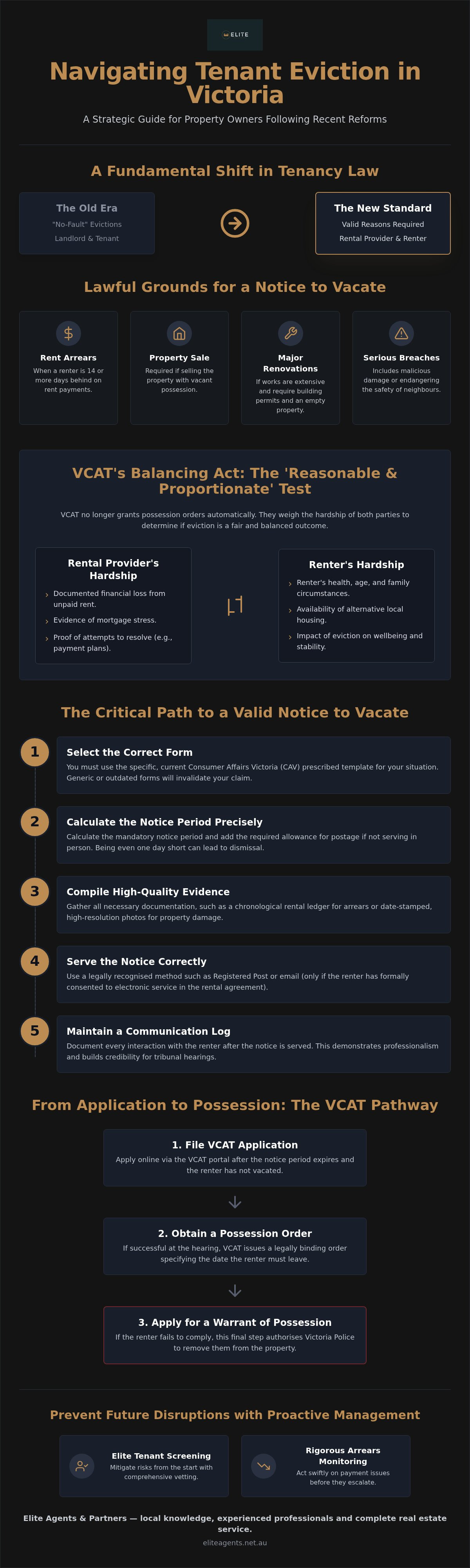
You must have a prescribed reason to regain possession. The most common ground is non-payment of rent, which follows the strict 14-day rule. If a renter is at least 14 days in arrears, a notice can be issued. However, the 2026 standards are rigorous. If you're ending a fixed-term agreement, you'll need to cite specific reasons like major renovations (requiring building permits) or the sale of the property with vacant possession. For serious breaches, such as endangering neighbours or causing malicious damage, immediate notice may be possible, but the evidentiary burden is high.
The 'Reasonable and Proportionate' Test
Perhaps the most significant hurdle in 2026 is the 'Reasonable and Proportionate' test. VCAT members no longer grant possession orders automatically just because a notice is valid. They now weigh the Rental Provider's loss against the Renter's hardship. To succeed, you must prove that evicting the tenant is a proportionate response to the situation.
- Documented Loss: Provide bank statements showing mortgage stress if rent isn't paid.
- Renter Circumstances: VCAT considers the renter's health, age, and the availability of alternative housing.
- Proactive Management: Show that you attempted to resolve the issue through a payment plan or mediation before applying to the tribunal.
A common mistake is failing to provide enough evidence of your own hardship. If the tribunal feels the impact on the renter outweighs your financial inconvenience, they may dismiss the application entirely. Success at VCAT requires a curated case that demonstrates both legal accuracy and a genuine effort to find an alternative solution.
The Critical First Step: Issuing a Valid Notice to Vacate
Precision is your greatest ally when initiating the legal process. In the sophisticated world of Victorian property investment, a Notice to Vacate isn't just a letter; it's a high-stakes legal document. Using this evicting a tenant VIC guide, you can ensure your paperwork withstands the scrutiny of a VCAT member. The process follows a strict procedural sequence that leaves no room for error.
- Step 1: Identify the correct form. You must use the specific Consumer Affairs Victoria prescribed template for your situation. Using a generic letter or an outdated version will invalidate your claim.
- Step 2: Calculate the notice period. You must add the Australia Post delivery allowance to the mandatory notice period if sending via post. Even being one day short will result in a dismissed application.
- Step 3: Document the breach. Compile high-quality evidence, such as a chronological rental ledger for arrears or high-resolution, date-stamped photos for property damage.
- Step 4: Serve the notice. Use Registered Post or a verified email address, provided the renter has formally consented to electronic service in the rental agreement.
- Step 5: Maintain a communication log. Record every interaction with the renter after the notice is served. This transparency builds credibility during tribunal hearings.
Navigating Rental Arrears Processes
Rent arrears remain the primary driver for disputes in Berwick and the surrounding South East. You can only issue a notice once the renter is at least 14 days behind. Under the '5 strikes' rule, if a renter pays their arrears within the 14-day notice period four times in a 12-month window, the fifth notice becomes final, regardless of whether they pay. Strategic communication is often more effective than immediate aggression. A firm, professional reminder can often resolve the issue without the need for a tribunal hearing. For landlords who find these conversations challenging, engaging a specialist property management team ensures these nuances are handled with professional grace.
Technical Accuracy: The Landlord’s Shield
A single incorrect digit in a postcode or a miscalculated date can reset your entire repossession timeline. The Notice to Vacate serves as the definitive legal foundation upon which your entire repossession case is built. In a premium market, there is no room for administrative sloppiness. Always verify that you are using the most current forms, as this technical rigour acts as your shield against unnecessary delays and prolonged financial loss.
Navigating the VCAT Process: From Application to Possession Order
Once the notice period on your Notice to Vacate has expired and the renter remains in possession, the next step is a formal application to the Victorian Civil and Administrative Tribunal (VCAT). For Berwick property owners, this transition from administrative notice to legal proceeding requires a shift in strategy. You'll lodge your application via the VCAT online portal, paying the standard residential tenancies fee of $76.10. Accuracy at this stage is non-negotiable. Any discrepancy between your initial notice and your tribunal application can cause the Member to strike out the case, forcing you to begin the entire process again.
Wait times for hearings in Melbourne's South East can vary based on the complexity of the list. While the tribunal aims for efficiency, the high volume of cases in the City of Casey means you should prepare for a wait of several weeks. Most hearings are currently conducted online or via telephone, though in-person hearings may be scheduled for complex disputes. This evicting a tenant VIC guide emphasises that your conduct during these sessions must remain professional and evidence-based. Emotional pleas carry little weight; the Member is looking for documented facts and legislative compliance.
Preparing Your Evidence Bundle
Your success depends entirely on the quality of your documentation. A disorganised application is a vulnerable one. You must assemble a comprehensive bundle that includes your current rental agreement, a chronological rental ledger, and a copy of the served Notice to Vacate with proof of service. For those seeking to maintain the highest standards of documentation, our Elite Guide to Property Management in Berwick provides a framework for keeping the rigorous records VCAT expects.
- Communication Logs: Provide a clear record of all emails and SMS messages.
- Expert Reports: If the eviction relates to property damage, include quotes or reports from qualified tradespeople.
- Witness Statements: In cases of danger or illegal conduct, written statements from neighbours or police reports are vital.
The VCAT Hearing Experience
During the hearing, stay focused on the grounds stated in your notice. Renters often introduce counter-claims, such as outstanding repair requests, to complicate the proceedings. You must be ready to show that you've met your obligations as a Rental Provider. If the Member finds in your favour, they will issue a Possession Order. This order officially states that you're entitled to the property. It's important to distinguish this from a Warrant of Possession; the order is the legal recognition of your right to the home, while the warrant is the instrument used by police to physically regain entry if the renter still refuses to leave.
Possession and Warrants: What Happens When a Tenant Won't Leave
Securing a Possession Order is a significant legal victory, but it doesn't always result in the immediate return of your keys. If a renter ignores the tribunal's deadline to vacate, you must move to the final stage of enforcement. This evicting a tenant VIC guide clarifies the transition from legal recognition to physical repossession. While the Possession Order confirms your right to the property, only a Warrant of Possession authorises the police to remove a renter who refuses to leave. In Victoria, a Warrant of Possession remains valid for exactly six months from the date of issue. If you fail to execute it within this window, the warrant expires, and you may be forced to restart your VCAT application from the beginning.
Execution requires a calm, professional approach. You don't have the legal authority to physically remove a renter or their belongings yourself. Doing so constitutes an illegal eviction and carries severe penalties. Instead, you must engage the Victoria Police. For properties in the South East, this involves coordinating with the Berwick or Narre Warren police station to schedule a time for the eviction. Their presence ensures the handover is conducted safely and lawfully, allowing you to finally secure the premises and change the locks. If the complexities of this final stage feel overwhelming, our property management specialists can oversee the entire execution on your behalf, ensuring your investment is returned to you without unnecessary conflict.
Obtaining and Executing the Warrant
You can apply for the warrant through the VCAT online portal the moment the date on your Possession Order passes. There is a separate fee for the warrant, and once issued, it's sent directly to the local police station. You or your property manager must then contact the police to pay the execution fee and book a time. On the day, a locksmith should be standing by. The police will enter first to ensure the property is vacant; once they've cleared the premises, you can proceed with changing the barrels on all external doors to prevent re-entry.
Dealing with Abandoned Goods
It's common to find items left behind after a forced eviction. Victorian law is very specific about how these must be handled to protect you from future 'theft' or 'loss' claims. You're required to store goods of value for a minimum of 14 days, while personal documents like passports or certificates must be kept for 90 days. Always create a detailed, date-stamped photographic inventory of every item remaining in the home. You must make a reasonable effort to notify the renter that their goods are being held. If they don't claim them within the statutory period, you may be able to sell or dispose of them, provided you've followed the notification requirements to the letter.
Preventing Future Disruptions: The Elite Property Management Advantage
While this evicting a tenant VIC guide provides the necessary legal framework for repossession, the ultimate goal for any sophisticated investor is to avoid the tribunal altogether. Eviction is a reactive measure. Elite property management serves as your proactive shield. By the time a Notice to Vacate is served, significant financial and emotional capital has already been spent. We believe the most successful investments are those where potential disputes are neutralised before they ever reach a boiling point.
Legislative compliance is a core component of our service. The 2026 updates to the Residential Tenancies Act are dense and unforgiving; missing a single safety check or using an outdated form can expose you to significant liability. We manage these complexities on your behalf. Our team ensures that your Berwick property remains fully compliant with gas, electrical, and smoke alarm regulations, removing the technical loopholes that renters often use to delay an eviction process. By maintaining a high standard of regular inspections across the City of Casey, we identify potential breaches of duty or property damage early. This vigilance ensures that small issues don't transform into the legal crises described in previous sections.
Elite Tenant Selection Strategies
Our selection process goes beyond a simple reference check. We perform deep-dive screenings using national tenancy databases like NTD and TICA to identify red flags long before a lease is signed. Verifying employment stability and previous rental history with 'Elite' precision ensures that only the most reliable renters occupy your home. Setting the right expectations starts with market-appropriate pricing. Consult our resource on Accurate House Valuations in Berwick to ensure your rent reflects the premium quality of your asset without attracting high-risk applicants.
Stress-Free Investment Ownership
A professional manager acts as your essential buffer during difficult disputes. We handle the firm negotiations and VCAT appearances so you can maintain your distance from the stress of a conflict. This professional distance is vital for preserving your peace of mind and ensuring that every decision made is rational and legally sound. When you calculate the ROI of professional management against the cost of a three-month vacancy or a protracted legal battle, the value of expert oversight becomes undeniable. Protect your investment with Elite Property Management and enjoy the quiet success of a well-managed portfolio in the City of Casey.
Mastering Your Investment Future in 2026
Repossessing a property in the current legal climate requires more than just a valid reason; it demands a strategic, evidence-led approach. This evicting a tenant VIC guide has highlighted that technical precision and an understanding of the 'Reasonable and Proportionate' test are now the primary drivers of a successful VCAT outcome. You've seen how a single administrative oversight can lead to costly delays, while proactive management remains your most effective shield against arrears and property damage.
As local Berwick market specialists, we provide the sophisticated oversight required to navigate these complexities with ease. Our team offers a comprehensive suite of services, including a rigorous 100-point tenant screening process designed to filter out risks before they enter your home. Should disputes arise, our expert VCAT representation ensures your case is presented with the technical accuracy the tribunal demands. Secure Your Investment with Elite Property Management Berwick today and regain the confidence to grow your wealth. You've built an impressive legacy; it's time to ensure it stays protected.
Frequently Asked Questions
How long does the eviction process take in Victoria in 2026?
The timeline varies significantly based on the specific grounds for eviction. For rent arrears, you must provide a 14-day notice, while property sales or renovations now require a 90-day notice period. Following the notice, VCAT wait times in Melbourne's South East often add several weeks to the schedule. This evicting a tenant VIC guide suggests allowing at least two to four months for the entire legal sequence to conclude.
Can I evict a tenant in VIC without a reason?
No, you cannot end a tenancy without a specific, lawful reason. The 2026 legislative environment has completely abolished 'no-fault' evictions for both periodic and fixed-term agreements. You must cite a valid reason, such as rent arrears, property damage, or the intention to sell the home with vacant possession. Failing to provide a prescribed reason will result in your notice being declared invalid by the tribunal.
What happens if a tenant refuses to pay rent but won't leave?
You must follow the formal legal pathway by issuing a 14-day Notice to Vacate for rent arrears once the renter is at least 14 days behind. If the renter remains after the notice expires, you'll need to apply to VCAT for a Possession Order. Should they continue to occupy the premises after the order date, your final step is obtaining a Warrant of Possession. This warrant allows Victoria Police to physically regain entry.
How much does it cost to apply to VCAT for a possession order?
The standard application fee for a residential tenancies matter at VCAT is $76.10 for the 2025-2026 period. These fees are scheduled to change on 27 June 2026 under the new Victorian Civil and Administrative Tribunal (Fees) Regulations 2026. This fee is a necessary investment to secure the formal Possession Order required to move forward with a legal eviction and protect your Berwick investment property.
Can I change the locks myself if the tenant is in rent arrears?
No, changing the locks yourself is strictly prohibited and constitutes an illegal eviction. Rental providers face severe legal penalties and significant fines for attempting to bypass the tribunal process. You only gain the right to change the locks once a Warrant of Possession has been executed by the Victoria Police. Professional management ensures you stay on the right side of these high-stakes regulations and avoid costly litigation.
What is the 'Reasonable and Proportionate' test at VCAT?
The 'Reasonable and Proportionate' test is a mandatory evaluation where a VCAT Member weighs your financial loss against the renter's personal hardship. They consider factors like the renter's health, age, and ability to find alternative housing. This evicting a tenant VIC guide recommends providing documented proof of your own mortgage stress or financial requirements to demonstrate that eviction is a balanced and fair response to the breach.
Does a 'Notice to Vacate' automatically end a lease?
A Notice to Vacate doesn't automatically terminate a rental agreement. It's a formal statement of intent that sets a date for the renter to leave the premises. The tenancy only officially ends when the renter moves out or when VCAT issues an order terminating the agreement. If a renter stays past the notice date, the lease continues until a Possession Order is granted and executed by the authorities.
Can a tenant challenge a Notice to Vacate at VCAT?
Yes, renters have the legal right to challenge any Notice to Vacate at the tribunal. They may argue the notice is technically flawed, the stated reason is inaccurate, or the eviction would cause them undue hardship. To defeat a challenge, you must ensure your paperwork is flawless and your evidence is robust. Most failed evictions in Berwick stem from minor procedural errors that renters successfully exploit during these hearings.
Disclaimer
Disclaimer: This article was prepared with the assistance of artificial intelligence and reviewed for general informational purposes. While reasonable care has been taken to ensure accuracy, property-market conditions, prices, legislation and other information may change. The content does not constitute legal, financial, taxation, valuation or other professional advice. Readers should verify information and obtain advice appropriate to their circumstances before making property decisions. Elite Agents & Partners does not guarantee any specific sale price, rental return or outcome.


