

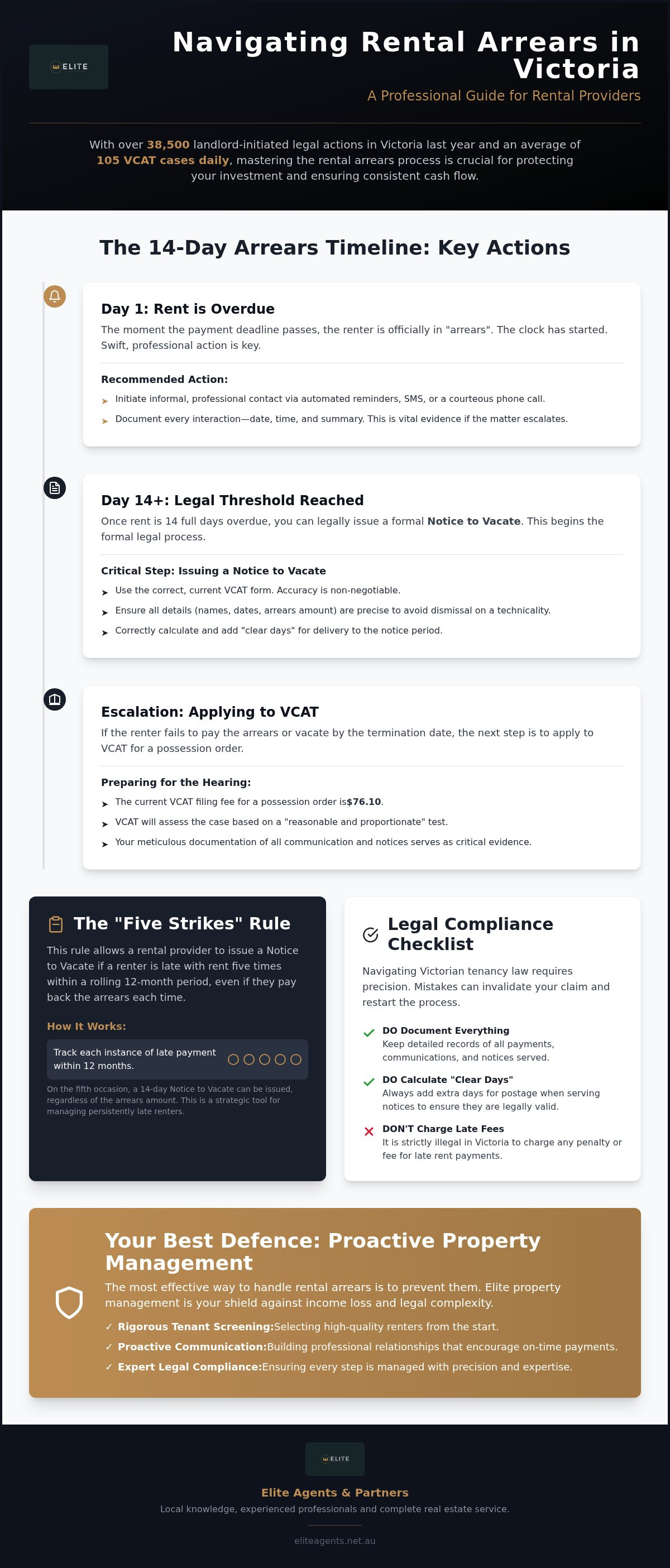
Did you know that over 38,500 Victorian landlords initiated formal legal action last year to resolve property disputes? With an average of 105 cases hitting VCAT every single day, it's clear that even the most curated investment portfolios aren't immune to payment delays. Mastering the rental arrears process Victoria mandates is no longer just a legal necessity; it's a sophisticated strategy to protect your financial legacy and maintain consistent cash flow.
We understand the anxiety that stems from a missed payment and the confusion surrounding the complex 5-strike rule in Victorian law. Managing a premium asset should be a source of pride, not a cause for constant worry about long-term income loss. This guide provides the professional clarity you need to navigate these challenges with ease. You'll gain a definitive timeline for legal action and discover the practical steps required to recover unpaid rent while keeping your rental agreement stress-free. From understanding the current 76.10 dollar VCAT filing fee to executing a formal Notice to Vacate, we've organised everything you need to remain a confident, high-performing property owner.
Key Takeaways
- Learn the exact legal requirements for issuing a Notice to Vacate once a renter reaches the 14-day arrears threshold.
- Master the precision of calculating "clear days" for document delivery to ensure your legal notices are never dismissed on a technicality.
- Navigate the rental arrears process Victoria mandates by strategically tracking late payments across a rolling 12-month period under the "five strikes" rule.
- Understand the "reasonable and proportionate" test used by VCAT to make informed decisions during possession order hearings.
- Implement high-calibre property management strategies to prevent arrears through rigorous tenant screening and proactive communication.
Understanding Rental Arrears in Victoria: The 14-Day Rule
In the sophisticated landscape of Victorian property management, precision is your greatest asset. Under the Residential Tenancies Act 1997, a renter enters "arrears" the very moment their payment deadline passes. If the rent was due on a Monday and the funds haven't cleared by Tuesday morning, the clock has officially started. While this might seem like a minor oversight, understanding the rental arrears process Victoria requires is essential for safeguarding your investment's cash flow. You cannot afford to be passive when your financial security is on the line.
The 14-day threshold serves as the legal gateway for formal intervention. You cannot issue a Notice to Vacate for non-payment until the renter is at least 14 days behind. This period isn't just a waiting game; it's a critical window for proactive management. Distinguishing between the "informal follow-up" phase and the "formal notice" phase ensures you maintain a professional relationship while preparing for potential VCAT proceedings. Early, polite intervention often carries a psychological weight that prevents a small delay from spiralling into a long-term debt. It signals that you are a diligent provider who values both the agreement and the property.
The Legal Definition of Arrears in 2026
Modern Victorian legislation now uses the term "Rental Provider" instead of landlord, reflecting a more service-oriented industry standard. When calculating that 14-day countdown, you must be meticulous. The count begins the day after the rent was due. However, if you're serving notices via post, you must account for additional "clear days" for delivery as specified by Consumer Affairs Victoria (CAV). Mistakes here can invalidate your entire claim. It's also vital to remember that charging late fees or administrative penalties is strictly illegal in Victoria. Your recovery is limited to the unpaid rent itself, making a swift rental arrears process Victoria strategy even more vital.
Immediate Steps When Rent is One Day Late
Efficiency starts on day one. High-performing property managers don't wait for a fortnight to pass before making contact. Start with professional, automated reminders that gently nudge the renter. Often, a simple, courteous phone call resolves the issue faster than a formal letter ever could. This human-centric approach maintains the aspirational elegance of your brand while ensuring results. Always document every interaction. Whether it's a text message or a summary of a phone conversation, these records serve as vital evidence if the situation escalates to a VCAT hearing. Consistent documentation proves you've acted reasonably, which is a key factor VCAT considers when reviewing possession applications.
The Formal Legal Process: Issuing a Notice to Vacate
Once the 14-day threshold is crossed, the rental arrears process Victoria mandates enters a formal legal phase. This is where precision becomes your shield. Issuing a Notice to Vacate (Form 1) is not merely a paperwork exercise; it is a legal declaration of your intent to protect your investment. To ensure the notice holds weight at VCAT, every field must be completed with absolute accuracy. This includes the renter’s full name as it appears on the agreement, the precise amount of arrears, and a termination date that allows for the required notice period. Any discrepancy, no matter how small, can jeopardise your standing if the matter reaches a hearing.
Calculating the delivery timeline is where many self-managed providers stumble. Clear days are the full days between the day of service and the termination date. If you serve the notice via registered post, you must add the standard delivery time to your 14-day notice period. Electronic service is often faster and more efficient, provided your renter has agreed to this method in writing within the residential rental agreement. Failing to account for these days can result in your application being dismissed, forcing you to restart the entire rental arrears process Victoria requires from day one. If you find these administrative hurdles daunting, engaging expert property management ensures every legal requirement is met with surgical precision.
Serving the Notice Correctly
Your choice of delivery method dictates the legality of the notice. Registered post remains a reliable standard, providing a clear paper trail for VCAT evidence. Alternatively, hand delivery or leaving the notice in the renter's letterbox are valid options, though they require meticulous documentation of the time and date. Avoid common pitfalls like using an outdated form or failing to sign the document. Even a minor clerical error can render the notice invalid, giving the renter grounds to challenge the eviction. The Rental Bond Authority (RBA) often becomes a focal point during these disputes, as the bond serves as a final security measure for unpaid rent once the tenancy eventually concludes.
Renter Rights to "Pay and Stay"
Victoria’s 2026 rental laws prioritise housing stability, which introduces the "pay and stay" concept. If a renter pays the full amount of arrears before the termination date on the notice, the notice is effectively cancelled. This protection applies for the first four instances of arrears within a 12-month rolling period. During this phase, maintaining an impeccable ledger is non-negotiable. You must be able to prove exactly when payments were received and how they were applied to the outstanding debt. While this rule offers renters a second chance, it requires landlords to be exceptionally diligent with their financial tracking to ensure they are ready if a fifth strike occurs.
Strategic Arrears Management: The "Five Strikes" Rule
For sophisticated investors in Berwick and across Melbourne's high-growth corridors, managing a serial late payer requires more than just patience; it demands a tactical understanding of the 12-month rolling period. While the "pay and stay" provision offers renters a safety net, the legislation also protects providers from perpetual financial instability through the five-strike rule. Navigating the rental arrears process Victoria enforces means you must view every late payment not as an isolated incident, but as a data point in a broader management strategy. Professionalism during this phase is paramount. You aren't just chasing funds; you're building a legal case that demonstrates a persistent breach of the rental agreement.
Tracking these instances with meticulous care is vital for maintaining the calibre of your investment. When a renter fails to pay on time, your response must be swift and documented. This consistency ensures that if the situation reaches a fifth occurrence, you possess the clear, undisputed evidence required to seek a permanent resolution. In a market as competitive as Victoria's, protecting your cash flow is the difference between a high-performing asset and a mounting liability.
How the 12-Month Rolling Period Works
The 12-month rolling period begins the moment you serve the first valid Notice to Vacate for arrears. If the renter pays the outstanding amount before the notice expires, that specific notice is technically "of no effect" regarding immediate eviction. However, it remains on the record as a strike. Crucially, paying the debt doesn't reset your count to zero. You must track every notice served within that window. The first four notices act as formal warnings where the renter can "pay and stay." Once you issue the fifth notice within that same 12-month period, your legal position shifts significantly. At this point, you can apply to VCAT for a possession order regardless of whether the renter pays the fifth instalment of arrears.
The VCAT Application Process for Frequent Arrears
Applying for possession after the fifth strike requires a robust evidentiary package. You'll need to present a flawless rent ledger, copies of all five notices, and logs of all related communication. The current VCAT general filing fee for this application is $76.10, a small price for restoring the integrity of your rental agreement. During the hearing, VCAT applies the "Reasonable and Proportionate" test. This means the member will weigh the impact of the arrears on your financial position against the renter's circumstances. To succeed, you must demonstrate that you've followed the rental arrears process Victoria prescribes to the letter, proving that a possession order is the only fair outcome after repeated breaches.
Navigating VCAT: Possession Orders and Eviction
The VCAT hearing is the pivotal moment in the rental arrears process Victoria mandates. It is a formal tribunal where evidence meets adjudication. You should expect a structured environment where a Tribunal Member reviews your documentation, including the notices and ledgers discussed previously. While the process may feel daunting, a well-prepared landlord who presents a clear, chronological history of the default stands on firm ground. Professionalism here is not just about the quality of your records; it's about the confidence with which you present your case. A successful outcome restores control over your asset and protects your long-term cash flow.
The "Reasonable and Proportionate" Test
VCAT does not issue possession orders automatically. Instead, the Member applies a "reasonable and proportionate" test to determine if ending the tenancy is the appropriate remedy. This involves weighing your financial loss and the impact on your investment against the renter's personal circumstances. VCAT must consider the renter’s ability to pay back the arrears before granting a possession order. This is why having sophisticated representation is essential. An expert can effectively argue that your financial security is being compromised by a persistent breach, moving the focus from emotion to the contractual obligations of the rental agreement. If you want to ensure your case is handled with the highest level of expertise, enlist our property management team to represent your interests.
Obtaining and Executing a Warrant
If the Tribunal grants a Possession Order but the renter refuses to vacate by the specified date, the next step is obtaining a Warrant of Possession. This document authorises Victoria Police to physically remove the renter from the premises. There is a specific timeline involved; a warrant must be issued and executed within a set period after the possession order is granted. You will need to pay a fee to VCAT to obtain the warrant and then organise a time with the local police station for the eviction. While the 2026 fee schedule is subject to change, the administrative cost is a necessary investment to reclaim your property.
The execution of a warrant requires a calm, professional approach. Victoria Police will attend the property to ensure the peace is kept while you or your agent change the locks. Once the renter has been removed, you may still face the challenge of abandoned goods. Victorian law is very specific about how these items must be handled, stored, and eventually disposed of. Mishandling a renter's property after an eviction can lead to further legal complications, making it vital to follow the rental arrears process Victoria sets out for post-eviction management. Protecting your asset doesn't end when the tenant leaves; it ends when the property is restored to its premium condition and ready for a new, high-calibre occupant.
Why Elite Property Management is Your Best Defence
Managing a high-calibre investment requires more than just collecting rent; it demands a proactive shield against financial instability. The complexities of the rental arrears process Victoria enforces can overwhelm even the most diligent self-managed landlord. By partnering with Elite Agents & Partners, you move beyond reactive crisis management into a space of curated, high-performance property oversight. Our approach combines sophisticated technology with deep-seated local expertise to ensure your cash flow remains uninterrupted and your asset's status is preserved.
We believe that a zero-tolerance policy for late payments is most effective when paired with high-frequency communication. Our systems utilise advanced property management software to track ledgers with surgical precision, sending automated reminders the moment a payment window is missed. This ensures that every step of the legal process is documented and compliant, leaving no room for error if a matter eventually requires VCAT intervention. We act as your professional partner, taking the emotion out of the transaction while prioritising your financial results.
Prevention Through Premium Screening
The most successful way to navigate arrears is to prevent them from occurring in the first place. Our rigorous tenant screening process is designed to identify the highest quality renters for your property. We go beyond basic credit checks, performing deep-dive financial verifications and exhaustive reference reviews. By identifying subtle red flags like inconsistent employment history or vague rental backgrounds early, we protect your investment from the start. For a comprehensive look at how we secure your returns, explore The Elite Guide to Property Management in Berwick.
Local Experts in the City of Casey
Success at VCAT often hinges on understanding the nuances of local lists. Our team possesses intimate knowledge of the Narre Warren and Berwick VCAT schedules, allowing us to represent your interests with the authority of a neighbourhood specialist. We understand the specific expectations of tribunal members in the City of Casey, ensuring your case is presented as "reasonable and proportionate" from the outset. This localised expertise is paired with our commitment to maintaining your home's aspirational value. If you're curious about how your property sits in the current market, our Accurate House Valuation Berwick resource provides the data-driven insights you need.
Take Action Today
Don't wait for a missed payment to realise the value of professional management. We offer a free rental appraisal to ensure your investment is positioned correctly in the 2026 market, attracting the high-quality renters your property deserves. Protect your investment with Elite Agents & Partners and experience the peace of mind that comes with elite-level property management.
Elevate Your Property Management Strategy
Navigating the rental arrears process Victoria mandates requires a blend of legal precision and proactive communication. By mastering the 14-day rule and the strategic 5-strike framework, you transform potential financial hurdles into a structured path toward recovery. Your investment deserves the protection of a system that prioritises consistent cash flow and ethical transparency. Whether you're managing a single property or a high-calibre portfolio, understanding these requirements ensures your assets remain high-performing and stress-free.
At Elite Agents & Partners, we specialise in providing sophisticated property management across Berwick and the City of Casey. Our team delivers a zero-tolerance arrears management programme backed by expert VCAT representation and rigorous compliance standards. We act as your dedicated partner, ensuring every legal detail is handled with meticulous attention so you can focus on the rewards of your success. Secure your investment with our Elite Property Management services and gain the confidence of having a local expert in your corner. Let's work together to protect your financial legacy and ensure your rental agreements are managed with the highest level of professional care.
Frequently Asked Questions
Can I evict a renter immediately if they don’t pay rent in Victoria?
No, you cannot evict a renter immediately under any circumstances. The law requires you to wait until the renter is at least 14 days in arrears before you can issue a formal Notice to Vacate. This notice is the first mandatory step in the rental arrears process Victoria mandates, and attempting to remove a renter without following this structured legal path can result in significant penalties for the rental provider.
What is the "5-strike rule" for rental arrears in VIC?
The "5-strike rule" is a strategic provision that protects landlords from habitual late payers within a rolling 12-month period. For the first four instances of arrears, a renter can "pay and stay" to cancel the notice. However, if a fifth Notice to Vacate is issued within that same year, the landlord can apply to VCAT for a possession order regardless of whether the renter pays the outstanding debt.
How long does the VCAT process take for rental arrears in 2026?
VCAT timelines in 2026 fluctuate based on the tribunal's current caseload, which recently reached an average of 105 dispute cases handled every single day. While possession hearings are generally prioritised over minor maintenance disputes, you should still prepare for a wait of several weeks. Engaging professional representation ensures your application is "bulletproof" from day one, preventing unnecessary adjournments or delays caused by clerical errors.
Can I charge my renter a late fee for unpaid rent?
No, charging late fees, interest, or administration charges for unpaid rent is strictly illegal in Victoria. The Residential Tenancies Act prohibits any penalty beyond the recovery of the actual rent owed. Sophisticated property managers avoid these illegal practices, focusing instead on high-frequency communication and rigorous tenant screening to maintain the financial integrity and aspirational elegance of the investment portfolio.
What happens if a renter pays the arrears after I serve a Notice to Vacate?
If the renter pays the full amount before the termination date on the notice, the notice is effectively cancelled for the first four instances in a year. While this allows the renter to remain in the property, the notice still counts as a formal "strike" on their record. It's essential to update your ledger immediately to reflect the payment while maintaining a copy of the notice for your 12-month tracking.
Is a text message or email enough to inform a renter of arrears?
A text message is a helpful tool for informal reminders, but it does not constitute a valid legal notice for eviction. To begin the formal rental arrears process Victoria requires, you must use the prescribed Form 1 Notice to Vacate. Email is only considered a valid method of service if the renter has specifically consented to electronic communication in writing within the original rental agreement.
What is a Possession Order, and how do I get one in Victoria?
A Possession Order is a formal directive from VCAT that legally confirms your right to reclaim the property. You obtain this by applying to the tribunal after a Notice to Vacate has expired without the renter leaving or paying. During the hearing, you must provide a flawless rent ledger and evidence of correctly served notices to prove that granting possession is a reasonable and proportionate remedy.
Does landlord insurance cover rental arrears and VCAT costs?
Most premium landlord insurance policies provide coverage for lost rent and the costs associated with VCAT applications, such as the current 76.10 dollar filing fee. However, coverage is often contingent on the landlord or agent having followed the legal arrears process to the letter. We recommend reviewing your policy's Product Disclosure Statement to ensure your specific management strategy aligns with the insurer's requirements for a successful claim.
Disclaimer
Disclaimer: This article was prepared with the assistance of artificial intelligence and reviewed for general informational purposes. While reasonable care has been taken to ensure accuracy, property-market conditions, prices, legislation and other information may change. The content does not constitute legal, financial, taxation, valuation or other professional advice. Readers should verify information and obtain advice appropriate to their circumstances before making property decisions. Elite Agents & Partners does not guarantee any specific sale price, rental return or outcome.


