

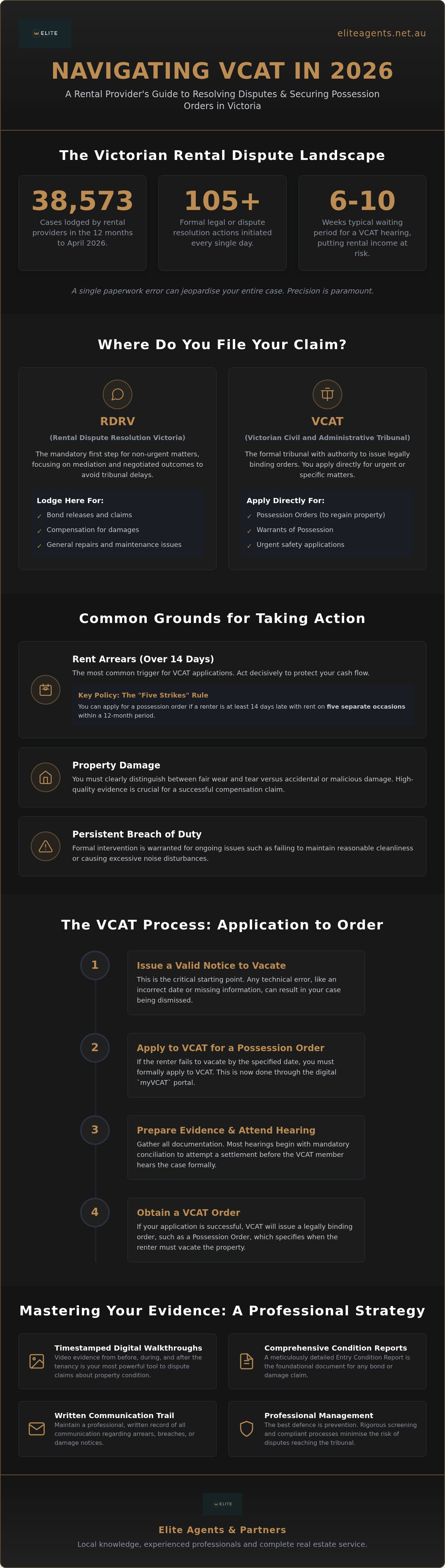
Over 105 Victorian rental providers initiate formal legal or dispute resolution actions every single day. With 38,573 cases lodged in the twelve months leading to April 2026, it's clear that even the most sophisticated investors eventually face the complexities of the VCAT process for landlords. We understand the stress of waiting six to ten weeks for a hearing while your rental income remains at risk, particularly with the recent shift to the myVCAT portal and new fee regulations effective 27 June 2026. It's a high-stakes environment where a single technical paperwork error can jeopardise your entire case.
You deserve the clarity and confidence to protect your property investment against these legislative hurdles. This comprehensive guide empowers you to resolve disputes and secure possession orders successfully by mastering tribunal requirements. We'll walk you through the mandatory RDRV prerequisites, the updated digital filing systems, and the specific evidence needed to ensure your bond claims and compensation applications are handled with precision and authority.
Key Takeaways
- Master the VCAT process for landlords by navigating mandatory mediation through RDRV and utilising the latest digital filing systems.
- Identify actionable grounds for possession, including the 14-day rent arrears rule and the critical "five strikes" policy for persistent late payments.
- Strengthen your case with a professional evidence strategy, prioritising timestamped digital walkthroughs and comprehensive Entry Condition Reports.
- Protect your investment by understanding the technical requirements for serving legal notices to ensure your application isn't dismissed on a technicality.
- Leverage professional property management to implement rigorous screening processes that prevent disputes before they ever reach the tribunal.
Understanding VCAT and the RDRV: The 2026 Landscape for Rental Providers
Success in the Victorian property market requires more than just high yields; it demands a sophisticated understanding of the legal framework. The Victorian Civil and Administrative Tribunal (VCAT) serves as the independent authority for resolving residential disputes. While the Residential Tenancies Act 1997 remains the governing legislation in 2026, recent amendments have transformed the VCAT process for landlords into a tiered, digital-first system. In the twelve months to April 2026, over 38,573 Victorian rental providers initiated formal actions. This volume underscores why the system now prioritises efficiency through a mandatory dispute resolution stage.
You must now distinguish between a "Rental Provider" and a "Renter" as these terms reflect the modern, service-oriented nature of the industry. The introduction of the Rental Dispute Resolution Victoria (RDRV) service has added a new layer to this landscape. This body acts as a vital first step for specific, non-urgent issues, aiming to reduce the burden on the tribunal system through facilitated discussion and mediation. Understanding these roles is the first step toward securing your investment.
VCAT vs. RDRV: Where Do You File Your Claim?
Knowing where to lodge your application is vital for a swift resolution. Claims involving bond releases, compensation for damages, or general repairs must now start through the myRDRV portal. This service focuses on mediation and negotiated outcomes to bypass lengthy tribunal waits. Conversely, VCAT retains exclusive jurisdiction over possession orders, warrants, and urgent safety applications. If your dispute involves a renter refusing to vacate after a valid notice, you'll bypass the RDRV and head straight to the tribunal. Mastery of these distinct pathways ensures your case isn't stalled by simple administrative missteps.
The Importance of Technical Compliance
Precision is your greatest asset. A single clerical error on a Notice to Vacate, such as an incorrect date or a missing signature, can void your entire case. The 2026 VCAT process for landlords prioritises technical compliance over intent. If the paperwork isn't perfect, the tribunal will likely dismiss the application, forcing you to restart the timeline and lose weeks of rental income. This rigidity makes professional oversight more valuable than ever.
Prepare for mandatory conciliation. Most hearings now begin with a requirement to attempt a settlement. During these sessions, the definition of "fair wear and tear" remains a frequent point of contention. Distinguishing between expected ageing and genuine damage requires high-quality evidence and a calm, authoritative presence. Approaching these discussions with a clear understanding of your rights ensures you maintain control over the outcome.
Common Grounds for VCAT Applications: When Should a Landlord Take Action?
Taking formal action is a decision no rental provider makes lightly. Protecting your asset is paramount. The VCAT process for landlords is often triggered by rent arrears exceeding 14 days. Under current Victorian legislation, the "five strikes" policy allows you to apply for a possession order if a renter has been at least 14 days late on five separate occasions within a twelve-month period. This provides a clear, structured pathway for dealing with chronic payment delays that threaten your cash flow and investment security.
Property damage remains another significant driver for tribunal applications. You must distinguish between accidental damage and malicious acts. The tribunal requires specific, high-quality evidence for the latter to award compensation. Beyond physical damage, persistent breaches of duty warrant formal intervention. These include failing to maintain reasonable cleanliness or causing excessive noise that disturbs neighbours. Referencing Consumer Affairs Victoria's guide to resolving disputes can help you determine if your specific situation meets the threshold for a formal application before you commit to the timeline.
Seeking a Possession Order
A Notice to Vacate is merely the beginning of the legal journey. If the renter does not leave by the specified date, you must apply for a Possession Order to legally regain control of the property. Timelines are strict. You generally have 30 days to apply after the notice expires. Be aware that VCAT members weigh "hardship" heavily during these hearings. If an eviction would cause extreme distress to a vulnerable renter, the tribunal might delay the effective date. This makes precise paperwork and a calm, professional presentation essential to avoid further delays.
Bond Claims and Compensation
Once a tenancy ends, you have a strict 14-day window to claim the bond. Common claims include professional steam cleaning or garden maintenance that wasn't completed to the standard documented in the initial condition report. If damage costs exceed the bond amount, you'll need to seek additional compensation through the tribunal. Meticulous record-keeping is your best defence here. If you're unsure about the current standing of your investment, obtaining a free rental appraisal can help establish the market value and condition of your property relative to its initial state.
The Step-by-Step VCAT Process for Landlords: From Application to Order
Success at the tribunal depends on a sequence of perfectly executed steps. The VCAT process for landlords begins long before you enter a hearing room; it starts with the delivery of a technically flawless legal notice. Whether you're issuing a Notice to Vacate for rent arrears or a Breach of Duty for property damage, the document must be served according to strict legislative requirements. Since the transition to the myVCAT portal in June 2026, the administrative path has become more streamlined, but the burden of procedural accuracy remains firmly with the rental provider.
Once you've lodged your application and paid the relevant filing fee, you must serve the application and your full brief of evidence on the renter. This ensures transparency and allows the renter to prepare their response. Most non-urgent cases will then move toward a mediation or compulsory conference. If a resolution isn't reached during these facilitated discussions, your case proceeds to a formal hearing where a VCAT Member will review the facts and issue a legally binding order. Following the correct path for resolving renting disputes is the only way to ensure your property rights are upheld.
Serving Documents Correctly
The method you choose to deliver documents can make or break your case. While electronic service is increasingly common, it's only valid if the renter has previously agreed to receive notices this way in writing. Registered post remains a reliable standard, but you must account for the "clear days" rule. This means you must add the required number of days for mail delivery to the notice period itself. If you fail to calculate this correctly, your application will likely be dismissed. Always retain your registered post receipts or a signed statutory declaration of service as your primary proof of delivery.
What Happens During Mediation?
Mediation is a strategic opportunity to regain control of the timeline. A VCAT mediator helps both parties reach a "consent order," which is a voluntary agreement that carries the same weight as a Member's decision. Settling early is often more profitable than waiting 6 to 10 weeks for a full hearing, as it provides immediate certainty and stops further rental loss. Before entering the session, organise your "bottom line" and identify what concessions you're willing to make. A successful mediation allows you to bypass the stress of a formal hearing while securing an enforceable outcome for your investment.
Mastering Your Evidence: How to Prepare for a VCAT Hearing
The tribunal operates on cold, hard facts. When preparing for the VCAT process for landlords, your emotional narrative holds little weight compared to a well-documented paper trail. The Entry Condition Report serves as your most powerful weapon in any dispute. It establishes the baseline state of your property before the tenancy began. Without a comprehensive, signed report, proving that damage occurred during a specific period becomes nearly impossible. This document is the foundation upon which every successful claim is built.
Supplement your written reports with high-resolution, timestamped photos and video walkthroughs. These visual assets provide undeniable proof of the property's condition at the start and end of a lease. For financial disputes, ensure your rent ledger is accurate, clearly formatted, and up to date. A messy spreadsheet can lead to confusion and unnecessary delays. Every email and SMS exchanged with the renter should be preserved in a communication log. These interactions often provide the vital context needed to prove a breach of duty or a failure to cooperate with reasonable requests.
Creating a Winning Evidence Bundle
Efficiency impresses the tribunal. Organise your documents chronologically to help the VCAT Member navigate your case with ease. Start with the lease agreement, followed by the condition reports, and then the relevant correspondence. If you are seeking compensation, you must include at least two quotes or a final invoice for every claim. A concise "Statement of Claim" should sit at the top of your bundle. This one-page summary outlines exactly what you are asking for and why. It allows the Member to understand your position within seconds of opening your file, establishing your authority from the outset.
Witness Statements and Expert Evidence
Subjective opinions rarely win cases. If you are claiming for structural damage or complex repairs, a professional tradesman’s report is essential expert evidence. This report should detail the cause of the damage and confirm it exceeds fair wear and tear. Your property manager often serves as your primary witness. Their testimony provides a professional, third-party perspective on the history of the tenancy and the steps taken to resolve the issue. Stick to factual evidence rather than hearsay; the tribunal wants to know what was seen and heard directly. To ensure your evidence is handled with this level of professional rigour, consider our comprehensive property management services to protect your Victorian investment.
Minimising VCAT Risk: Why Professional Property Management is Your Best Defence
The most effective way to navigate the VCAT process for landlords is to ensure you never have to attend a hearing in the first place. High-performance property management prioritises prevention through meticulous attention to detail and rigorous compliance. By conducting routine inspections every six months, we identify minor maintenance issues or lease violations before they evolve into costly legal battles. This proactive stance protects your capital growth and ensures your property remains a premium asset in the competitive Victorian market. Prevention is always more profitable than litigation.
Proactive Dispute Resolution
Negotiation is a specialised skill that requires both empathy and firm legal knowledge. Resolving rent arrears or bond disagreements through facilitated discussion often yields a faster, more profitable result than waiting months for a tribunal date. We focus on open communication to settle disputes early, often before a formal application is even necessary. We ensure every managed property strictly adheres to the Victorian Minimum Standards, removing the renter's ability to lodge counter-claims for non-urgent repairs. For a deeper look at protecting your assets and maximising returns, explore The Elite Guide to Property Management in Berwick.
The Elite Agents & Partners Advantage in Berwick and Casey
Our team brings unparalleled local expertise to the Dandenong and Pakenham VCAT venues. We understand the specific preferences and procedural nuances of the Members presiding over cases in the City of Casey and surrounding municipalities. This regional authority is backed by our sophisticated approach to tenant screening Victoria. By utilising comprehensive databases and rigorous background checks, we select only the most reliable renters. This elite selection process significantly reduces the likelihood of ever needing to initiate the VCAT process for landlords.
Professional representation is not just about showing up; it’s about expert file management. We handle the entire process from the initial Notice to Vacate to the final warrant of possession, ensuring every document is technically perfect. This removes the emotional burden from your shoulders and ensures your case is presented with the professional authority the tribunal expects. Navigating these changes alone is a risk your investment shouldn't take. To discover the true potential of your investment under expert care and secure your peace of mind, Book a Free Rental Appraisal with Elite Agents & Partners today.
Secure Your Investment with Expert Oversight
Mastering the VCAT process for landlords requires more than just a passing knowledge of the law; it demands a commitment to procedural excellence. As we've explored, the difference between a successful possession order and a dismissed application often lies in the quality of your initial documentation and your ability to navigate the new digital portals with precision. Transitioning from a reactive to a proactive strategy is the only way to ensure your property remains a high-performing asset in the ever-evolving Victorian rental landscape.
Elite Agents & Partners provides expert VCAT representation for local landlords, backed by a rigorous tenant screening process and specialised knowledge of the City of Casey rental market. By managing every technical detail from service of notice to the final hearing, we provide the peace of mind that comes from knowing your investment is in professional hands. Our team is dedicated to safeguarding your property rights while maintaining the high standards your portfolio deserves.
Protect your investment with Elite Agents & Partners and secure the future of your Victorian property. Let us lead the way to a more certain and successful investment journey.
Frequently Asked Questions
How long does the VCAT process take for landlords in 2026?
The median timeline from filing an application to attending a hearing is currently between 6 and 10 weeks. This duration depends on the complexity of your dispute and the specific volume of cases at your local venue. Urgent applications, such as those involving immediate safety risks or significant property damage, are often prioritised to ensure a faster resolution for rental providers.
Can I represent myself at a VCAT hearing, or do I need a lawyer?
You're legally permitted to represent yourself, as VCAT is designed to be a less formal alternative to the court system. However, many investors prefer to have their property manager handle the VCAT process for landlords to ensure all technical paperwork is flawless. Professional representation provides a level of authoritative calm and ensures your evidence meets the strict requirements of the Residential Tenancies Act.
What is the cost of a VCAT application for a residential tenancy dispute?
In early 2026, the general filing fee for a residential tenancy application was $76.10. It's important to note that new fee regulations take effect on 27 June 2026, which are intended to simplify the schedule and improve the tribunal's sustainability. You should verify the exact current fee on the myVCAT portal before you finalise your submission.
What happens if a renter does not follow a VCAT order?
If a renter fails to comply with a legally binding order, you must take steps to enforce it through the appropriate authorities. For monetary orders, this often involves seeking enforcement through the Magistrates' Court. If the order relates to vacating the property and the renter remains, you'll need to apply for a Warrant of Possession to involve the police in the eviction process.
Can I claim VCAT application fees back from the renter?
You can request that the VCAT Member orders the renter to reimburse your filing fee as part of your claim. While this is a common outcome for successful applications, it's not guaranteed and remains at the discretion of the presiding Member. Including this request clearly in your initial application is a vital step in the VCAT process for landlords to recover administrative costs.
What is a Warrant of Possession and how do I get one?
A Warrant of Possession is a formal document that authorises the police to remove a renter from your property. You can only apply for this warrant after VCAT has granted a possession order and the renter has failed to leave by the specified date. Once VCAT issues the warrant, you must take it to the local police station to arrange for its execution.
How does the RDRV change the way I claim the bond?
The RDRV service is now the primary gateway for bond and compensation claims, focusing on mediation rather than immediate litigation. You'll participate in facilitated discussions to reach a mutual agreement on bond deductions. If these sessions don't resolve the issue, the RDRV will help transition your case to VCAT, ensuring that your claim has been through a rigorous dispute resolution process first.
What are the "Minimum Standards" and how do they affect my VCAT case?
Minimum Standards are mandatory requirements for safety, heating, and security that every Victorian rental property must meet. If your property isn't compliant, a renter can use this as a powerful defence or even lodge a counter-claim for rent reductions during a hearing. Maintaining these standards is essential for a successful VCAT outcome and protects you from claims of professional negligence.
Disclaimer
Disclaimer: This article was prepared with the assistance of artificial intelligence and reviewed for general informational purposes. While reasonable care has been taken to ensure accuracy, property-market conditions, prices, legislation and other information may change. The content does not constitute legal, financial, taxation, valuation or other professional advice. Readers should verify information and obtain advice appropriate to their circumstances before making property decisions. Elite Agents & Partners does not guarantee any specific sale price, rental return or outcome.


