

Buying a property is easier when you understand the steps, organise your finances and put your offer in writing. Whether you are purchasing your first home, upgrading, downsizing or investing, focus on three things: what you can afford, whether the property suits your needs, and the terms you are agreeing to.
This guide explains the main steps for buying an established residential property in Victoria, with a focus on private sales.
1. Understand Your Budget
Before inspecting properties, speak with your lender or mortgage broker about your borrowing capacity and comfortable monthly repayments.
Allow for costs beyond the purchase price:
- Stamp duty, unless an exemption or concession applies.
- Conveyancing or solicitor fees.
- Building and pest inspections.
- Loan fees, insurance and moving expenses.
- Repairs or improvements after settlement.
Keep some savings available for unexpected expenses. Your maximum purchase price should leave room for these costs and ongoing ownership expenses. Consumer Affairs Victoria recommends checking your finances and understanding the costs before buying. Consumer Affairs Victoria
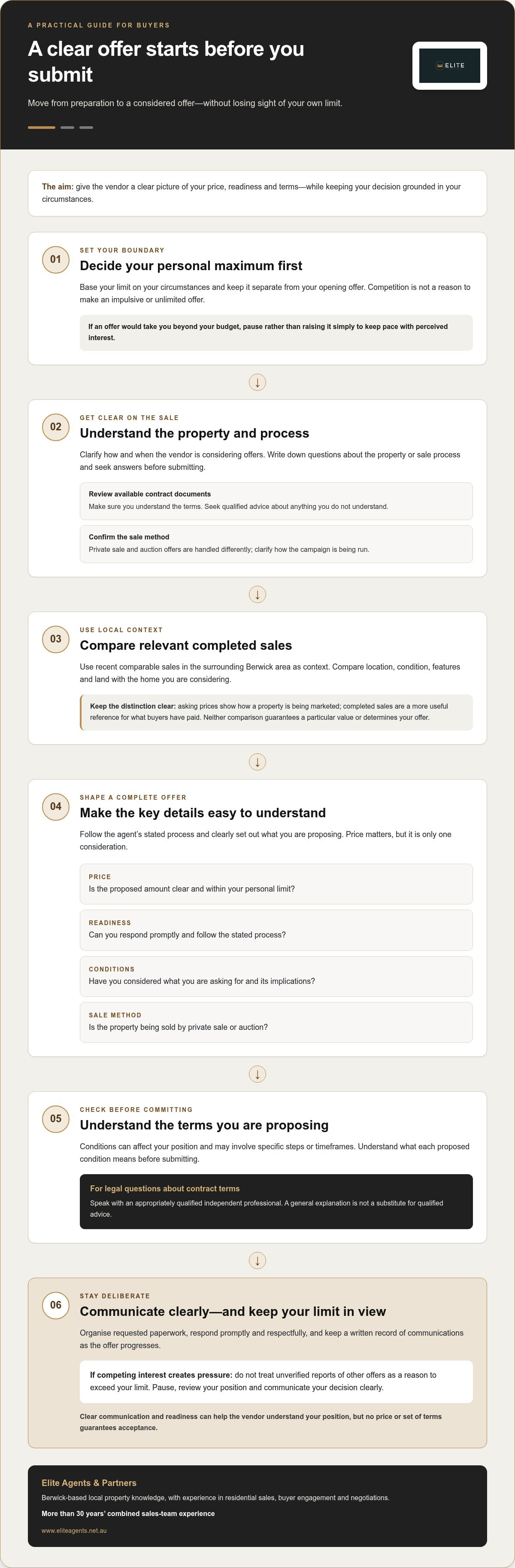
Decide your maximum before negotiating. Another buyer’s budget should never determine yours.
2. Prepare Your Finance
Arrange finance pre-approval early so you have a clearer understanding of your purchasing position.
Ask your broker what still needs to happen before the lender gives final approval. Do not describe your finance as fully approved unless your lender has confirmed that position.
If you need loan approval before committing, discuss a suitable finance condition with your conveyancer.
Also confirm how much cash you have available for the contract deposit. This is the payment required under the sale contract; it may differ from the total savings your lender requires.
3. Inspect the Property Carefully
Look beyond furniture, styling and fresh paint. Consider the layout, natural light, storage, parking, outdoor areas and general condition.
Ask about anything that concerns you, including water marks, cracks, renovations or additions.
Check the location against your everyday needs: schools, transport, shops, work and nearby development.
If the property is tenanted, establish whether you are buying with the tenancy continuing or seeking vacant possession. Have your conveyancer check that the contract matches your requirements.
Where appropriate, arrange an independent building and pest inspection before committing, or negotiate a suitable inspection condition.
4. Review the Contract and Section 32
Request the contract of sale and Section 32 vendor statement from the agent.
The Section 32 contains important information about the land, including title restrictions, easements, zoning and outgoings. It must be provided before you sign the contract. Have a licensed conveyancer or solicitor review both documents and explain anything that could affect your purchase. Consumer Affairs Victoria
Ask them to check:
- Special conditions and important deadlines.
- Owners corporation information, where applicable.
- Any restrictions affecting your intended use.
- Whether vacant possession is included.
- Fixtures and items included in the sale.
The selling agent can explain the sales process, while your own adviser reviews your legal position.
5. Decide Your Price and Terms
Research recent sales of comparable properties. Consider differences in land size, condition, accommodation and location.
Choose a price that reflects the property’s value to you and stays within your budget.
Your offer should also cover:
- The deposit amount and payment timing.
- Your preferred settlement date.
- Any finance or inspection conditions.
- Items you want included.
- Any other essential requirements.
For example, a proposed offer might be $750,000, a 5% deposit and a 60-day settlement, with finance and inspection conditions drafted by your conveyancer.
Make sure every term is realistic.
6. Submit Your Offer in Writing
Always put your offer in writing so the price and terms are clearly recorded.
Email is useful for an initial proposal, although the agent may ask you to submit a formal offer by signing the reviewed contract.
Include:
- Full names of all purchasers.
- Property address.
- Exact purchase price.
- Deposit amount or percentage.
- Proposed settlement date.
- Conditions and their deadlines.
- Your contact details.
- Any proposed offer expiry.
Avoid vague wording such as “around $750,000” or “subject to the usual checks”.
After a telephone negotiation, confirm any revised offer in writing. Keep copies of your correspondence so everyone can follow the latest proposal.
7. Ask for the Offer to Be Presented
In Victoria, agents must communicate verbal and written offers to the seller unless the seller has instructed otherwise in writing. Written offers are recommended because they provide a clear record; the obligation is not limited to written offers. Consumer Affairs Victoria
Include this request:
Please confirm receipt of my written offer, present it to the owner and advise me of their decision, including any counteroffer.
Ask when you should expect an update. If the agent says your offer will not be presented, ask for clarification about the seller’s instructions.
The owner decides whether to accept, reject or negotiate. Submitting an offer does not guarantee acceptance or an immediate response.
8. Understand Negotiations and Competing Offers
The owner may accept your proposal, reject it, suggest different terms or take time to decide.
Consider the whole proposal when responding. A different settlement date may be easier to accommodate than a higher price.
If several buyers are interested, ask about the submission process and deadline. You may not receive another opportunity to improve your offer.
Submit an amount you are comfortable paying. Avoid removing important protections simply to compete.
Confirm every change in writing and ask your conveyancer to review revised conditions before signing.
9. Check the Contract Before Signing
Make sure the final contract accurately records the agreed price, deposit, settlement date, conditions and inclusions.
Check purchaser names carefully and ensure all purchasers understand their obligations.
Do not assume an email saying “offer accepted” completes the purchase. For a standard private sale, the property is sold when buyer and seller have signed the contract. Obtain the completed copy and send it to your conveyancer and broker promptly. Consumer Affairs Victoria
Pay the deposit as required by the contract. Independently verify payment instructions before transferring money.
10. Meet Your Contract Deadlines
Once signed, act promptly on finance applications, inspections and required documents.
Diary every deadline and keep your conveyancer informed of progress. If approval or an inspection is delayed, contact them before the deadline.
Do not assume extra time is automatic.
Eligible Victorian private residential purchases generally have three clear business days to cool off, starting when the buyer signs. Exceptions include auction purchases and purchases within three clear business days before or after a public auction. Cooling off also involves a deduction of $100 or 0.2% of the purchase price, whichever is greater. Ask your conveyancer whether it applies. Consumer Affairs Victoria
11. Prepare for Settlement
Confirm your lender and conveyancer have the documents and funds they need. Arrange utilities, insurance and moving plans around the confirmed settlement arrangements.
Book a final inspection through the agent. Check the property’s condition and included items, and report concerns to your conveyancer promptly before settlement. Consumer Affairs Victoria
At settlement, the balance is paid and the ownership transfer is completed. Arrange key collection once settlement is confirmed. Consumer Affairs Victoria
Focus on the essentials: know your budget, check the property and documents, submit a clear written offer, request the owner’s response and meet every contractual deadline.
Disclaimer
Disclaimer: This article was prepared with the assistance of artificial intelligence and reviewed for general informational purposes. While reasonable care has been taken to ensure accuracy, property-market conditions, prices, legislation and other information may change. The content does not constitute legal, financial, taxation, valuation or other professional advice. Readers should verify information and obtain advice appropriate to their circumstances before making property decisions. Elite Agents & Partners does not guarantee any specific sale price, rental return or outcome.


