

In Victoria's current rental climate, a single administrative error on a breach notice can cost you months of rental income and legal standing. It's incredibly stressful to watch your investment suffer while you struggle to understand how to handle a bad tenant legally under the strict 2025 reforms. You want to be a fair landlord, but you also need to protect your financial future and the integrity of your property. Managing a difficult tenancy requires more than just patience; it demands a precise knowledge of the Residential Tenancies Act.
This guide provides the exact legal framework you need to manage difficult situations with confidence, ensuring you follow the latest Victorian legislation to the letter. You'll learn the step-by-step process for issuing valid notices, navigating the VCAT backlog, and recovering unpaid rent. We also preview the high-performance management systems used by specialists in Berwick and the City of Casey to screen for premium renters, helping you regain control and secure your property's long-term success.
Key Takeaways
- Distinguish between minor tenant issues and serious legal breaches defined by the Victorian Residential Tenancies Act.
- Master the exact sequence of documentation needed to issue a valid Notice of Breach of Duty that withstands legal scrutiny.
- Discover how to handle a bad tenant legally by presenting a professional, evidence-based case during VCAT hearings.
- Implement rigorous screening protocols and national database checks to prevent problematic tenancies before they begin.
- Understand how professional property management in Berwick provides a vital buffer between you and complex legal disputes.
Identifying a Legal Breach: What Defines a Bad Tenant in Victoria?
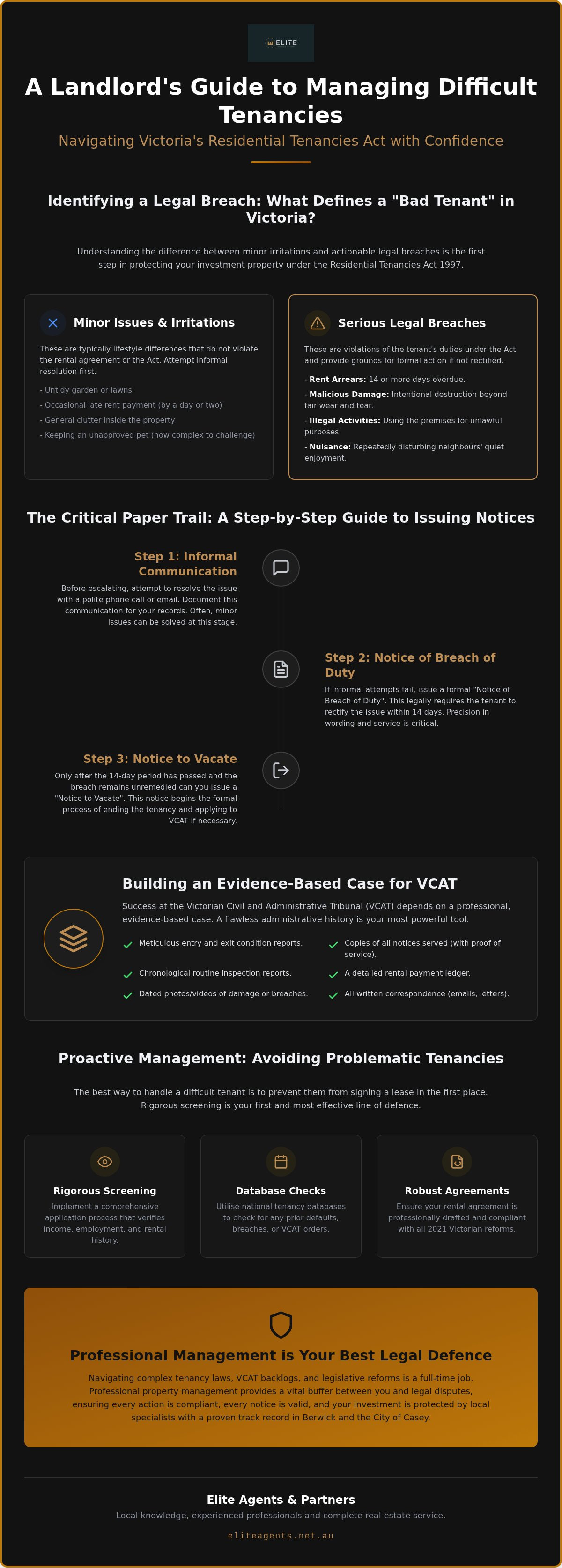
In Victoria, a "bad tenant" isn't merely a subjective label for someone who misses the odd garden weeding. Legally, the term refers to a renter who fails to meet the specific duty provisions outlined in the Residential Tenancies Act 1997. Understanding how to handle a bad tenant legally starts with distinguishing between minor irritations and actionable legal breaches. While a renter keeping an unapproved pet might have been a major issue in the past, current Victorian laws make this a complex area to challenge. In contrast, serious breaches like consistent rent arrears or significant property damage provide a clear, albeit procedural, path to regaining control of your investment.
The "Duty to Take Care" clause is a vital tool for Victorian landlords. Under Section 63, renters must ensure they don't intentionally or negligently cause damage to the premises. To succeed at VCAT, you must prove the damage exceeds fair wear and tear. This requires meticulous entry and exit reports. This distinction is often the difference between a successful bond claim and an expensive, out-of-pocket repair bill for the owner.
Common Legal Breaches in Victorian Tenancies
The most frequent catalyst for legal action is rent arrears. In Victoria, you cannot issue a Notice to Vacate for non-payment until the rent is at least 14 days overdue. This 14-day rule is a non-negotiable statutory requirement that demands precise timing. Other serious breaches include:
- Malicious Damage: Intentional destruction of property, which differs from accidental mishaps.
- Illegal Activities: Using the premises for prohibited activities, which can trigger faster legal interventions if documented correctly.
- Nuisance and Interference: Repeatedly disturbing the quiet enjoyment of neighbours in Berwick or Narre Warren, which violates the renter's duty to the community.
The Importance of the Rental Agreement
A sophisticated rental agreement is your first line of defence. While the 2021 Victorian reforms introduced standard terms, specific additional clauses regarding maintenance and property use must be drafted with precision to survive VCAT scrutiny. Many landlords find their custom clauses challenged if they conflict with the Act's new minimum standards. Under the 2021 Victorian reforms, a valid breach is a failure to comply with a specific duty provision that results in a formal Notice of Breach of Duty being issued to the renter. Expert property management ensures your lease remains a robust legal shield rather than a liability during these disputes.
The Paper Trail: How to Issue Formal Notices and Breaches Correctly
Winning a dispute at VCAT requires more than just being right; it requires a flawless administrative history. If you're wondering how to handle a bad tenant legally, the answer lies in the precision of your documentation. Start with informal communication. A polite email or phone call often resolves minor issues without the need for litigation. However, if the renter fails to respond or the behaviour persists, you must transition immediately to formal channels to protect your legal standing and your investment.
The first official step is issuing a "Notice of Breach of Duty to Tenant of Rented Premises". This document clearly outlines the violation and provides the renter with a statutory 14-day period to rectify the issue. You can't rush this process or take shortcuts. If the 14 days pass and the breach remains unremedied, you then have the legal grounds to escalate to a "Notice to Vacate". This tiered approach demonstrates to authorities that you've acted reasonably and followed the law to the letter.
Serving Notices According to Consumer Affairs Victoria
Precision is everything when serving legal documents. According to Consumer Affairs Victoria, you must use approved methods such as registered post or electronic service. Electronic service is only valid if the renter has consented to it in writing within the rental agreement. A common pitfall for self-managed landlords in the City of Casey is miscalculating the notice period. You must account for delivery times, weekends, and public holidays. Counting "clear days" is essential. Failing this calculation often results in VCAT dismissing the case on a technicality before the evidence is even heard. It's a frustrating setback that's easily avoided with professional oversight.
Evidence Gathering for Landlords
Your routine inspection reports are powerful legal assets. They provide a chronological record of the property's condition, making it difficult for renters to claim damage was pre-existing. For more significant disputes involving property neglect, using property appraisal Berwick data can help demonstrate a tangible loss in market value or rental potential. This data adds a layer of professional authority to your claim that is hard to dispute.
Keep a detailed communication log. Save every email, text message, and timestamped photo. These records act as your best friend when standing before a member at VCAT. If the administrative burden feels overwhelming, requesting a free rental appraisal can be the first step in transitioning to a high-performance management system that handles these complexities for you.
Navigating VCAT: The Legal Path to Eviction and Dispute Resolution
Navigating the Victorian Civil and Administrative Tribunal (VCAT) is the definitive stage in learning how to handle a bad tenant legally. For landlords across the City of Casey, the prospect of a hearing often brings a mix of anxiety and frustration. With current waiting times for residential tenancies lists typically spanning 10 to 12 weeks, you cannot afford to have your case dismissed on a technicality. When you apply for a Possession Order, you are entering a formal legal arena where the quality of your evidence is the only currency that matters.
Understanding how to handle a bad tenant legally involves preparing for the "Reasonable and Proportionate" test. VCAT members use this framework to determine if the impact of an eviction on the renter is justified by the severity of their breach. They weigh factors like the frequency of the issues, the renter's personal circumstances, and your own financial loss. While many owners fear the tribunal is biased, a well-documented case makes it difficult for a member to rule against you. Professionalism and a calm, evidence-based approach are your most effective tools in this environment.
Preparing Your VCAT Submission
Success at VCAT requires a meticulously organised evidence bundle. This should include your signed rental agreement, a chronological communication log, and timestamped photos of any property damage. Be prepared for tenant hardship arguments. Renters often cite financial distress or health issues to delay an eviction. You must counter these by clearly demonstrating your own financial hardship and the reasonable steps you took to resolve the issue before escalating. Having a professional representative ensures your case is presented with the authority and legal precision required to cut through emotional appeals and focus on the facts of the breach.
Warrants of Possession and the Sheriff
If the tribunal rules in your favour, they will issue a Possession Order. It's vital to remember that a Possession Order is not an immediate eviction. The order specifies a date by which the renter must vacate the property. If they remain past this deadline, you must then apply for a Warrant of Possession. This warrant authorises the Sheriff of Victoria to physically enter the property and remove the occupant. You should never attempt a physical self-eviction. The Sheriff will coordinate with Victoria Police if necessary to ensure the process is handled safely. Once you regain possession, the Rental Bond Authority (RBA) manages the final bond distribution based on the evidence of arrears or damage established during your hearing.
Proactive Management: Avoiding the Nightmare Tenant Before They Sign
The most effective way to handle a bad tenant legally is to prevent the tenancy from ever commencing. High-performing landlords understand that a vacant property is far less expensive than one occupied by a problematic renter who stops paying or damages the home. This starts with implementing the gold standard of tenant screening Victoria. By filtering applicants through a rigorous, multi-tiered process, you significantly reduce the risk of future VCAT appearances or expensive rent arrears recovery processes.
Professional property managers utilise national tenancy databases like TICA to identify "serial" bad tenants who have a history of unpaid rent or property damage across Australia. While a renter might present well in person, these databases provide an objective history that personal references often hide. Always prioritise professional references from previous property managers over personal character references. A previous manager will provide factual data regarding ledger history and inspection outcomes, whereas a friend or family member will rarely offer an unbiased view. This level of due diligence is the foundation of a sophisticated investment strategy.
Safeguard your bond claim from day one with a meticulous entry condition report. This document must include high-resolution photography and detailed descriptions of every room, including the condition of floor coverings and window safety devices. Under the 2025 reforms, your evidence must be beyond reproach. In the event of a dispute, this report serves as your primary evidence, making it much easier to prove that damage was not pre-existing. It's a simple step that provides immense legal protection.
Setting the Standard During the Application Process
Identifying "red flags" early requires a keen eye for detail. Under the new regulations effective March 2026, you must use the standardised rental application form, making the verification of the information provided even more critical. Look for inconsistencies in employment history or unexplained gaps in rental records. Income verification must be robust, ensuring the rent-to-income ratio is sustainable for the renter's lifestyle. Our local expertise in the Berwick market allows us to cross-reference local employers and understand the typical stability of various industries in the City of Casey, providing an additional layer of security for your investment.
Regular Inspections as a Deterrent
In Victoria, you can conduct a general inspection every six months, with the first one occurring after the initial three months of the tenancy. These visits are not just about finding faults; they are about maintaining a professional relationship while asserting clear boundaries. Addressing minor maintenance or cleanliness issues early prevents them from escalating into major legal breaches. If you are tired of managing these risks alone, contact Elite Agents & Partners to secure a management plan that prioritises your peace of mind and long-term rental yield.
Why Professional Property Management is Your Best Legal Defence
Engaging a specialist agency provides more than just administrative support; it creates a sophisticated legal buffer between you and the emotional volatility of tenant conflict. When you understand how to handle a bad tenant legally, you realise that every interaction must be clinical, documented, and compliant with the latest Victorian reforms. Elite Agents & Partners acts as your professional shield, ensuring that hard conversations and complex legal filings never disrupt your personal life. We transform a high-stress confrontation into a managed procedural sequence, protecting both your mental well-being and your financial interests.
Our team provides the distinct advantage of mastery over property management Berwick regulations. We don't just react to problems; we implement a high-performance management system designed to maximise your ROI through consistent rent collection and proactive dispute resolution. By maintaining a professional distance, we ensure that every Notice of Breach or VCAT application is handled with the clinical precision required to win. This authoritative approach often resolves issues before they reach a tribunal, saving you the 10 to 12 week wait currently associated with VCAT hearings.
The Elite Agents & Partners Advantage in the City of Casey
Our local expertise extends across Narre Warren, Cranbourne, and Officer, providing us with a deep understanding of the regional rental market. Director Javid Zada and the team bring a proven track record in VCAT representation, ensuring that local landlords are never left vulnerable to technicalities or tenant hardship claims. This specialized knowledge allows us to anticipate local market shifts and regulatory changes before they impact your yield. We offer a level of personalized service that treats your investment with the same care and attention to detail as a high-end sales campaign.
Take the Stress Out of Landlording
Self-managing a rental property is now a high-risk strategy in Victoria's increasingly complex legal climate. A single misstep in calculating notice periods or failing to meet the new 2025 minimum standards can lead to significant financial penalties. When you conduct a cost-benefit analysis, the modest investment in professional management fees is vastly outweighed by the protection against legal losses, property damage, and unpaid rent. Don't leave your financial future to chance in an environment where the law demands perfection. Request a free rental appraisal and management consultation today to discover how we can secure your investment and provide the peace of mind you deserve.
Secure Your Investment with Professional Precision
Mastering the intricacies of the Victorian Residential Tenancies Act is no longer optional for the sophisticated investor. You've learned that a successful outcome depends on a flawless paper trail and a deep understanding of how to handle a bad tenant legally within the VCAT framework. By prioritising rigorous documentation and proactive screening, you transform your property from a source of stress into a high-performing asset. The 2025 reforms demand absolute compliance, but they also provide a clear structure for those who know how to navigate them.
Don't let a difficult tenancy compromise your financial future or your peace of mind. Our local Berwick property specialists provide the expert VCAT representation and comprehensive tenant database screening you need to stay ahead of the market. We act as your professional shield, ensuring every process is handled with clinical precision and local authority. Protect your investment with Elite Agents & Partners today. You deserve a partner who is as committed to your property's success as you are. We look forward to helping you regain control and secure a premium rental experience.
Frequently Asked Questions
Can I change the locks if my tenant stops paying rent in Victoria?
No, you cannot change the locks or physically exclude a renter from the property, even if they have stopped paying rent. This is considered an illegal lockout and can result in significant fines and compensation claims at VCAT. The only legal way to regain possession is to follow the formal process of issuing notices and obtaining a Warrant of Possession for the Sheriff to execute safely.
How much notice must I give a tenant to vacate for a lease breach?
You must first provide a 14-day Notice of Breach of Duty to allow the renter to rectify the issue. If the breach remains unremedied after this period, you may then issue a Notice to Vacate. The specific notice period for the vacate order varies depending on the nature of the breach, typically ranging from 14 days for rent arrears to immediate notice for serious danger or damage.
What is the "Reasonable and Proportionate" test at VCAT?
The "Reasonable and Proportionate" test is a mandatory assessment where VCAT members weigh the severity of the breach against the impact of eviction on the renter. The member considers factors like the renter's financial hardship, health, and whether the breach was intentional. Understanding this test is crucial when learning how to handle a bad tenant legally, as your evidence must demonstrate that eviction is a justified response.
Can I evict a tenant in Victoria to sell my property?
Yes, you can issue a Notice to Vacate if you intend to sell the property with vacant possession. Under Victorian law, you must provide the renter with 60 days' notice and ensure the notice is issued after a contract of sale has been signed or if you have a genuine intention to sell immediately. Note that "no-fault" evictions were banned in November 2025, so your reason must be valid and documented.
How do I claim the bond if there is significant damage to my Berwick rental?
You must apply to the Residential Tenancies Bond Authority (RTBA) to claim all or part of the bond at the end of the tenancy. If the renter disputes the claim, the matter will proceed to VCAT. You'll need to provide your entry and exit condition reports, high-resolution photographs, and professional quotes for repairs to prove the damage exceeds fair wear and tear. Our team often handles these complex submissions for Berwick landlords.
Is a verbal agreement legally binding for a tenancy in Victoria?
Verbal agreements can be legally binding, but they are incredibly difficult to enforce at VCAT. Victorian law requires landlords to use the prescribed standard form for all residential rental agreements. Without a written lease, you'll struggle to prove specific terms or duty provisions during a dispute. To protect your investment, always ensure every agreement is documented in writing and compliant with the latest 2025 legislative standards and safety requirements.
What happens if a tenant refuses to leave after a VCAT Possession Order?
If a renter remains in the property past the date specified in a Possession Order, you must apply for a Warrant of Possession. This warrant authorises the Sheriff of Victoria to physically remove the occupants and change the locks. You should never attempt to enter the property yourself during this time. The Sheriff will coordinate the eviction, often with Victoria Police assistance, to ensure the transition is handled safely and legally.
How long does the VCAT eviction process typically take in 2026?
The timeline for a VCAT hearing in 2026 typically spans 10 to 12 weeks for residential tenancy lists. This is in addition to the statutory notice periods you must provide before applying. Because the process is lengthy, it's vital to issue notices correctly the first time. Any administrative errors can result in your case being dismissed, forcing you to restart the entire sequence and further delaying how to handle a bad tenant legally.
Disclaimer
Disclaimer: This article was prepared with the assistance of artificial intelligence and reviewed for general informational purposes. While reasonable care has been taken to ensure accuracy, property-market conditions, prices, legislation and other information may change. The content does not constitute legal, financial, taxation, valuation or other professional advice. Readers should verify information and obtain advice appropriate to their circumstances before making property decisions. Elite Agents & Partners does not guarantee any specific sale price, rental return or outcome.


